How the body helps the brain develop

How the body helps the brain develop

The body isn’t just there to serve as a vehicle for our large heads and heavy brains.  Instead, the body has huge impact on the brain’s development. In fact, without having a body that moves, we would have very inefficient brain function because the all-important connections between brain cells wouldn’t form. We would be about as intelligent as a rooted plant.  We need movement to reach our human potential.

In spite of what we know, too many people still believe that learning happens in the brain and the body doesn’t play a role.  See how teachers insist that children sit still without any fidgeting with any part of the body when in the classroom.

In the past, children could make up for this body neglect by using their bodies in all kinds of activities after school hours.  They used to climb, run, tumble, dig, fall into ditches and fall out of trees.  The change isn’t all due to TV and screen time but also because today’s families live in small homes without access to open play areas.   Long hours are spent in commuting to and from school. The streets have become dangerous places.  It’s been estimated that children are spending 25% less time on free play than they did in their grandparents’ time.

The reality is that the brain needs the body’s movement in order to create the neural pathways that make ease of learning possible.  You can’t make a child learning ready with workbooks, i-pad games or computer programmes.  It develops as children’s brains mature along with experiences occurring as a result of bodily sensation and movement.

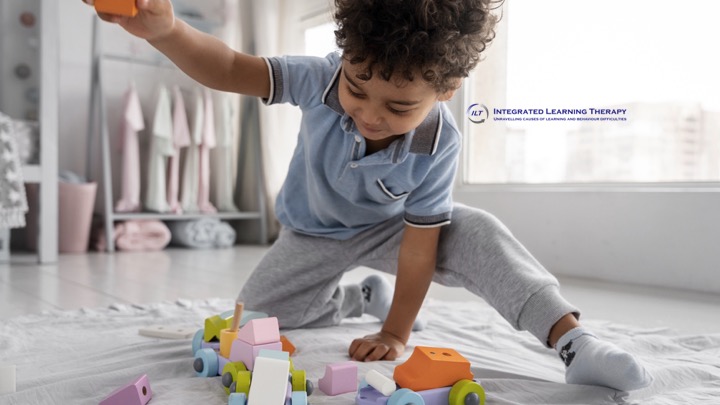
Important movements are the early reflexes, followed by large body movements such as climbing, jumping, swimming, playing hopscotch, catching and throwing balls, riding bicycles, running, skipping, sweeping and digging.  Smaller body movements develop fine motor skills, such as cutting vegetables, drawing, building with blocks, moving to music and learning rhythm through clapping, singing and so on.   Movements that need crossing the midline help build the pathways connecting the two brain hemispheres and are crucial for learning to read, write and understand maths.

Children love to move; they need to move.  If their bodies are given the chance needed to move in play, they will develop to a stage of learning readiness.  Perhaps not all of them will reach this stage at exactly the same time but we do have the genetic potential to be wired to learn.

So limit sedentary time.  Push your children out of doors.  Make sure you spend quality time in play parks or open spaces over the weekends.  Buy body healthy toys like trampolines, skipping ropes and balance boards rather than the latest hi-tech toy.   Go back to basics if you really want your child to reach his or her potential at school

Image supplied by Freepik.
Four-year olds shouldn’t be sitting still

Four-year olds shouldn’t be sitting still

Children aged four and five and attending pre-school should not be sitting still at tables for any length of time.  Lucy Sors and Louise Whitfield, experts in  primary education, express their belief that expecting children to sit and formally learn how to write at this early stage conflicts with widely accepted theories around cognitive and physical development.

Research emphasises the importance of active play and exploration, leading to children understanding their world and supporting their language, communication and thought. In addition, physical play develops strength, coordination and motor skills which are necessary before being given a pencil to write. They should be encouraged to move and explore through free play instead of sitting still.

Through role playing, they learn how to communicate, question and hold conversations before following instructions.

At these young ages, children’s enjoyment of learning should be the priority.  For every child this will, of course, be different and education practices should respond to children’s preferences and interests.  Countries following the belief in the power of play in childhood include Finland, where children start primary school at the age of seven years.  In New Zealand, early childhood education follows a “play-based” curriculum which promotes the power of storytelling and play to build foundations in reading, writing and maths.

Sors and Whitfield emphasise that when we play, listen, read and talk with children, we give them a great start in life. This begins with looking at them as individuals. Learning in the early years should foster a love of learning, promote positive relationships and help children to understand the world.  Nurture, care, play and exploration should be prioritized to develop confident, resilient, and adaptable learners who can navigate a fast-changing world.

Supplied by The Conversation

Image supplied by Freepik

Magic movements

Magic movements

From virtually the moment of conception, human genes dictate that we must and will move.  The earliest movements we make are not deliberate but are automatic reflexes.  These ‘primitive’ reflex movements are truly magic because they help develop the brain.

Each time you feel the baby moving inside your uterus, you can celebrate, knowing that those movements are laying down the patterns of neural pathways that serve to connect the different brain areas.  These are the pathways that are vital for learning, behaving appropriately, forming healthy relationships with the people in our lives and enjoying emotional well-being.

They also help develop ability to control the body, muscle tone, good integration of information coming in from the different senses and survive the early months of life.

At birth, our brains are far from completely developed so we depend on primitive reflexes to help us enter the world and then keep us alive.  For example, the Moro reflex is a reaction to being startled. This reflex produces cortisol and adrenaline to help activate the birth process. Then the Asymmetrical Tonic Neck Reflex (ATNR) comes into play, helping the foetus twist down the birth canal during a normal birth.  After we are delivered, the Moro reflex triggers our first breath and permits us to straighten out after months spent in the foetal position in the uterus.

After birth, the sucking reflex allows the mouth to take in nourishment and swallow, while many others are present to help in other ways.  Slowly, these early reflexes are integrated as new ones take their place.  Each reflex appears in a crucial time, does its important job and is then replaced in order for higher development to happen. Ultimately, primitive reflexes are replaced by so-called postural reflexes which allow us to crawl and then finally to walk.

 Problems can be experienced later on if these primitive reflexes are not absorbed or integrated.  Retained reflexes can cause emotional problems, timidity and fearfulness, attention problems and learning difficulties, depression, sensory disorders, lack of confidence, tantrums, bedwetting, fidgeting, thumb sucking and many of the challenges often seen in children.  Unfortunately, children with learning, behavioural and emotional issues often fail to be helped. This is because the symptoms they show are treated, rather than being helped to overcome the underlying causes of their problems.  

There are many reasons for reflexes to remain present and not be integrated.  Included in these are the diet and general health and emotional well-being of the mother during pregnancy. Traumatic birth events including Caesarean birth and the use of instruments can interfere with amongst others, the Moro reflex. This has the domino effect of interfering with the integration of all the reflexes that should follow, setting up glitches in brain development that can persist for years.

When several unintegrated reflexes persist, normal tasks that are taken for granted by most of us become difficult if not impossible.  When children experience sensory integration disorders, vision and listening challenges, extreme shyness and lack of confidence, ADHD, learning challenges and developmental delays, it is time to look for help.  Reading and writing difficulties, language and speech delays, disorganisation, fidgeting and lack of focus all may be signposts to the need for reflex integration.

 The good news is that it is not difficult to integrate reflexes by helping the child with a movement programme.  Certain movements replicate the earlier movements that somehow failed to achieve reflex development or integration, so by showing a child different movements, we give the brain a second chance to reorganise those all-important networks needed for efficient functioning.

 Movement is magic!  Even more magical are the improvements seen in children when they are given the chance to overcome early setbacks in their development.

If you suspect that a child may have unwarranted challenges in coping with home and school demands, you should seriously consider a neurodevelopmental assessment.

Image supplied by Freepik.

Skip to School Success

Skip to School Success


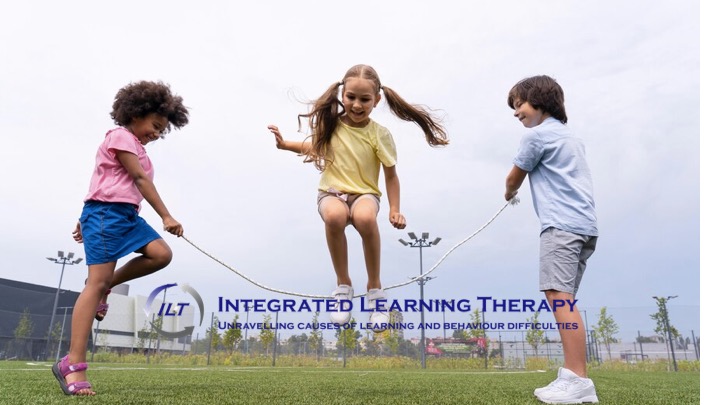
Do you remember the days when streets outside our homes and school playgrounds were full of (mostly) girls skipping rope?  We don’t see this as often today, although it always gives me great pleasure when I do come across a few girls enjoying themselves in this age-old pastime. 

I feel good when I see them because I know that they’re engaging in an activity that is just as good for their brains as it is for their growing bodies!   Athletes use skipping ropes to help them get super fit.  Boxers, like Muhammad Ali, have been including skipping in their daily routines for many years and others, like Venus Williams and Martial arts star Bruce Lee did it too.  But with new knowledge from neuroscience, we now know that aerobic activity with added mental engagement can do wonders for helping the brain as well as the body.  Aerobic exercise, raising the heartrate, produces chemicals that promote neural growth, make new connections, boost attention, focus and ability to learn efficiently.  Many skipping games involve reciting rhymes, following a sequence of movement and so on, which meet the exact criteria for brain-healthy exercise.

Our children need to move so that their brains can function optimally.  With today’s crowded housing, fears of allowing children to play on the street and even limited playground space at some schools, space for games is limited.  This is where skipping comes in – it doesn’t need much space at all.

So why don’t families and schools begin a country-wide movement to encourage learners to skip?  Make it part of the daily schedule and PT periods; arrange competitions; reward perseverance, practice and achievement so that learners realise that their school takes skipping seriously and values it as a sport.  Moms and Dads can join in skipping sessions at home – it’s just as good for mature brains and bodies!

There are resources to help you with ideas about teaching skipping and then proceeding from individual to group skipping games.  One that I came across on the internet is a publication from Canada, entitled Jump! The Nick guide to jumping rope.  It covers the length of rope necessary for one’s height, different types of rope that are suitable and stretching exercises that are useful to do prior to beginning a skipping session.  It then proceeds to explain various games from the most basic, solo skipping movements to challenges involving groups of children.  Visit the websites www.nick.com and the booksellers, www.chroniclekids.com.  I’m sure there are other sources available too.

 So grab some lengths of rope get your learners moving!


Image supplied by Freepik.


How can you help your child acquire ball skills?

How can you help your child acquire ball skills?

Being able to throw and catch balls and other objects is a fundamental movement skill that is considered an important milestone in a child’s early years.  This is because they form the foundation for other, more complicated physical activities.

In recent years, researchers have been commenting on a noticeable decline in children’s throwing and catching skills.  Stuart Evans and Kane Middleton, writing for The Conversation, discuss this and suggest ways for parents to help their children develop these important skills.

Why is it so important to be able to throw and catch?

Not all children will become ‘sporty’ and shine in one or more sporting activities. Yet it is important they develop fundamental movement skills, including throwing and catching, running, skipping and balancing.

These skills are seen as “fundamental” because they are needed to engage in physical activities effectively and confidently. These also form the basis of skills in all other sports. Without these skills, it is difficulty to remain active and healthy throughout life, which is so important to our physical and mental health.

Children need help to learn

By the time a child is about five, they should be able to throw using a coordinated movement of the throwing arm and opposite leg stepping forward. They should be able to catch using their hands only.

A common misconception is that children learn skills such as throwing and catching automatically. But research in Australia and elsewhere shows that an increasing number of children are not developing adequate basic skills, nor playing as much sport as they used to.

How can you help your child’s throwing and catching skills?

Early childhood education includes fundamental movement skills in their programmes. Guidelines note it takes between 240 and 600 minutes of teaching time for a child to become proficient in one fundamental movement skill.

But research suggests parents can also help their kids at home and you can start building these skills from about the age of two. Here are some tips:

Start slowly

When you’re helping your child, start with larger balls or balloons and work on overarm throwing, underarm throwing and two-handed passes. These can include chest passes and bounce passes like you see in netball and basketball.

As your child gets older, you can make the balls smaller and distances greater. And you can introduce challenges, such as “show me a different way of throwing or catching.”

Have formal and informal sessions

Research shows it’s important for children to get both unstructured play and structured practice to learn these skills.

This gives them specific tips and a chance to experiment and develop their skills.

Vary the activities

Repeatedly practicing the same skill under the same conditions can lead to rapid gains in skill development. But it does not teach children how to apply this skill.

Research suggests children should practice skills in a variety of ways.

If a task is unpredictable, it will create a more “game-like” environment so children are challenged to find solutions.

For example, you could have a game that involves throwing to a target. You could have changing targets (instead of just throwing at the same target over and over).

Keep it fun

While you may be “practicing” or “working” on a skill, try and make it enjoyable. Perhaps it forms part of a trip to the park or it involves a favourite toy. Maybe it involves different equipment or a game where the ball is a character.

If you have concerns about how your child‘s fundamental movement skills are developing, talk to their teacher or consult a professional to help.


Provided by The Conversation 

Image provided by Freepik