
What happens when reflexes don’t integrate?

What happens when reflexes don’t integrate?

Last week I wrote about the importance of early developing reflexes for brain development.  This week, we’ll have a brief look at the importance of those reflexes being integrated into developing brain functions.  Once the brain has developed certain areas, the early reflexes are no longer needed, so any sign of them still being present is a red flag for healthy neurodevelopment. 

They should ‘disappear’ after infancy but when they persist,  they can interfere with:

Cognitive Skills

  • Difficulty with focus and attention
  • Challenges in reading and writing due to poor eye tracking or hand-eye coordination
  • Trouble with processing sensory input, leading to overstimulation or withdrawal

Motor Skills

  • Poor balance and posture
  • Awkward or delayed gross motor skills (e.g., walking, jumping)
  • Struggles with fine motor control, affecting tasks like handwriting or using utensils

Emotional Regulation

  • Heightened anxiety or emotional reactivity
  • Difficulty with self-soothing
  • Challenges in social interaction due to sensory overload or impulsivity

Early interventions that make a difference

The good news? Reflex integration can be supported through targeted activities.  ILT is an approach that uses a movement based programme to stimulate the brainstem and promote reflex inhibition.   Activities like crawling and rolling mimic early developmental stages.  These give the brain a ‘second chance’ to complete unfinished reflex integration and thus help brain development.

Why Early Support Matters

Early intervention can:

  • Prevent academic and social delays
  • Improve self-confidence and independence
  • Reduce frustration for both child and caregivers

Some home-based activities

Home-based activities for reflex integration can be playful, simple, and surprisingly effective. These exercises help the nervous system “rewire” and support healthy development — especially for children with retained primitive reflexes. Here are some engaging options you can try at home:

Rhythmic Movement Exercises

These mimic early developmental patterns and stimulate the brainstem.

  • Cross Crawls: Touch your right elbow to your left knee and alternate. Great for integrating the Asymmetrical Tonic Neck Reflex (ATNR).
  • Homolateral Crawling: Crawl with same-side limbs moving together. Helps with coordination and body awareness.
  • Rocking on Hands and Knees: Gently rock back and forth to stimulate vestibular input and calm the nervous system.

Balance & Core Muscle Activities

These help with postural control and inhibit reflexes like the Tonic Labyrinthine Reflex (TLR).

  • Animal Walks: Bear walk, crab walk, or frog jumps — fun and functional!
  • Balance Beam: Use a strip of tape on the floor and walk heel-to-toe.
  • Yoga for Kids: Poses like “tree,” “cat-cow,” and “downward dog” build strength and coordination.

Sensory Play

Supports sensory integration and emotional regulation.

  • Sand or Rice Bin Exploration: Hide small toys and let kids dig with their hands.
  • Water Play: Pouring, scooping, and splashing stimulate tactile and proprioceptive senses.
  • Textured Crafts: Use cotton balls, foil, fabric, and beads to create art with varied textures.

Music & Movement

Rhythmic activities help regulate reflexes and improve timing.

  • Dancing to Music: Encourage free movement to different tempos.
  • Clapping Games: Try “Pat-a-cake” or rhythm clapping to build coordination.
  • Marching & Drumming: Great for bilateral coordination and auditory processing.

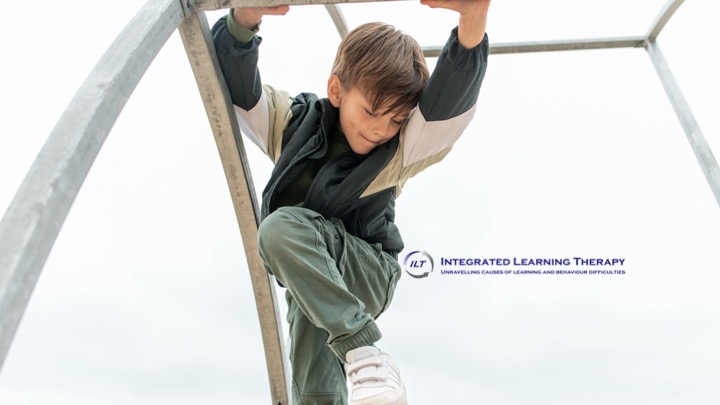
Image supplied by Freepik.

Why do early reflexive movements matter?

Why do early reflexive movements matter?


Early, or prenatal, reflexive movements are involuntary movements that occur in the womb, such as:

  • Kicking
  • Stretching
  • Sucking
  • Grasping

They’re not controlled by conscious thought but are triggered by the developing nervous system.

 How Do These Movements Influence Brain Development?

Reflexive movements aren’t just random flutters — they’re crucial for wiring the brain. Here’s how:

  1. Stimulating Neural Pathways
  • Every movement sends signals through the spinal cord and brainstem, activating neurons.
  • This repeated signalling helps strengthen synaptic connections, which are the links between neurons.
  1. Promoting Synaptic growth
  • Movement encourages the formation of new synapses — the junctions where neurons communicate. Eventually this results in the neural network that makes the brain functional.
  • The more varied the movement, the more complex the neural network becomes.
  1. Supporting Brain Maturation
  • Reflexive movements are signs that the central nervous system is maturing.
  • Pediatricians often assess reflexes to evaluate neurological health in newborns.

Why It Matters

Without these early movements, the brain wouldn’t receive the stimulation it needs to grow, connect, and specialize. It’s a beautiful feedback loop: movement drives brain development, and brain development refines movement.

Cognitive Development: Movement as mental blueprint

Reflexive movements in the womb help build the brain’s capacity for thinking and learning.

How it works:

  • Sensorimotor Integration: These movements activate sensory systems (touch, proprioception, vestibular), which feed data into the brain. This helps the brain learn to process input and generate output, a key skill for cognition.
  • Neural Mapping: Repetitive movements help the brain map the body — a process called body schema. This is essential for spatial awareness, attention, and even language development later on.
  • Executive Function Seeds: Coordinated reflexes lay the groundwork for goal-directed behavior. For example, the rooting reflex (turning toward touch) is a precursor to intentional searching and problem-solving.

Emotional Development

Even before birth, babies begin to experience and respond to emotional cues — and reflexive movements are part of that emotional scaffolding.

Key connections:

  • Regulation & Soothing: Reflexes like sucking and grasping are self-soothing mechanisms. They help infants regulate stress and begin to form emotional resilience.
  • Attachment Readiness: Movements like turning toward a voice or grasping a finger prepare the baby for bonding behaviours after birth. These reflexes help babies recognize caregivers and respond to comfort.
  • Environmental Sensitivity: Studies show that babies in the womb respond to music, voices, and even maternal stress levels. Reflexive kicks or movements may increase when the mother is anxious, suggesting a shared emotional state.

To summarise: Reflexes as building blocks of the brain:

Very briefly, the primitive or prenatal reflexes:

  • Stimulate neural growth
  • Train the brain to respond to the world
  • Prepare the infant for social and emotional interaction

This is why Integrated Learning Therapy considers healthy reflex development as crucial for neurodevelopment.  They do help ensure that children develop the ability to learn efficiently once they enter school.

Next week’s post will continue to explore more about these reflexes.

Image supplied by Freepik.