
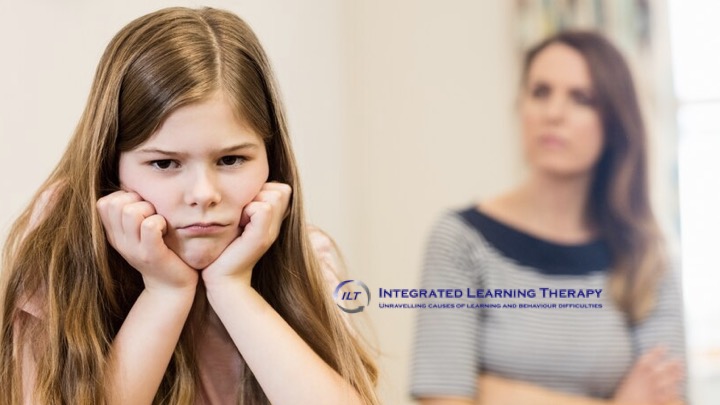
Is your child a Jekyll and Hyde?
Many readers will agree that their children are well-behaved at school or at their friends’ homes but turn into little monsters once they get back home.
Of course, all children misbehave sometimes, especially when they get tired after a long school day or play date. However, some children seem to behave consistently worse at home than when with other people.
Trevor Mazzucchelli explores this common problem for The Conversation and offers the following insights.
Behaviour is learned
From very early days, a child‘s behaviour produces results or outcomes. For example, babies soon learn crying is a very effective way of signalling their distress and will result in having a nappy changed or being fed. A smile often results in an adult smiling back, cooing or cuddling the baby. In these ways, children learn that their behaviours can be a way of controlling the actions of others.
The bad behaviour pay-off
Children’s behaviour, whether desirable or undesirable, is influenced by the consequences it produces.
Sometimes, the reactions of parents or siblings can accidentally reward misbehaviour, and children learn undesirable behaviour has a payoff.
For example, children may learn that when they don’t do as they’re told, they get extra attention from their parents. This attention may be unpleasant, and not regarded as a ‘reward’ by the adults but children might like the attention they get as a result.
Children may also learn when they whine, complain and nag for something they are more likely to get it.
Unfortunately, in this scenario, the child is rewarded for whining and the parent is rewarded for giving them what they want by stopping an unpleasant noise (at least in the short term). As both the child and the parent are rewarded, this interaction is likely to occur again.
Why do children behave better at school?
Children behave better at school than at home because teachers have very good systems in place. Children are kept busy with a variety of engaging activities, expectations of children’s behaviour are clear, and the payoff for desirable behaviour is reliable. Teachers are well-practiced at recognizing and rewarding desirable behaviour through attention, praise, and sometimes token reward systems.
Children also tend to copy their peers’ behaviour, particularly if they see it gets results, such as attention from the teacher or access to prized activities.
How can parents encourage children to behave better at home?
The good news is if children behave well in one setting, you know they are capable of doing the same at home.
Parents can value children‘s need to relax at home while still expecting them to be polite and follow rules. By making some small changes, it’s usually possible to see much improved behaviour.
Here are some practical things parents can do:
- Establish routines. Have a routine for when your child gets home from school or outings. This might include allowing your child to unwind and relax, giving them a healthy snack, and then setting them up with an engaging activity. Routines make it easier for everyone to transition from one setting to another. It is even better if the routine includes activities—such as colouring-in or a run around outside—that are calming or burn off energy.
- Set simple house rules. Have a few simple rules that clearly communicate to your child how you expect them to behave. For example: “use an inside voice” or “keep the toys on the floor”.
- Notice good behaviour. Let your child know when they have done the right thing. Do this by describing what you are pleased with (“you two are sharing the toy so nicely”). This will make it more likely the behaviour will occur again.
- Spend small amounts of time with your child regularly. This is especially important when your child approaches you for help or attention. It shows you’re there for them and they do not need to become louder or act out to get your attention. Spending small amounts of time—as little as one or two minutes—often throughout the day is a powerful way of strengthening your relationship with your child and preventing problem behaviour.
- Have realistic expectations. Change is easier if you focus on one or two goals at a time. Also, when striving to improve behaviour, expect occasional setbacks. No child (or parent) is perfect!
Provided by The Conversation
Image provided by Freepik