Emotional problems in children with ADHD symptoms

Emotional problems in children with ADHD symptoms

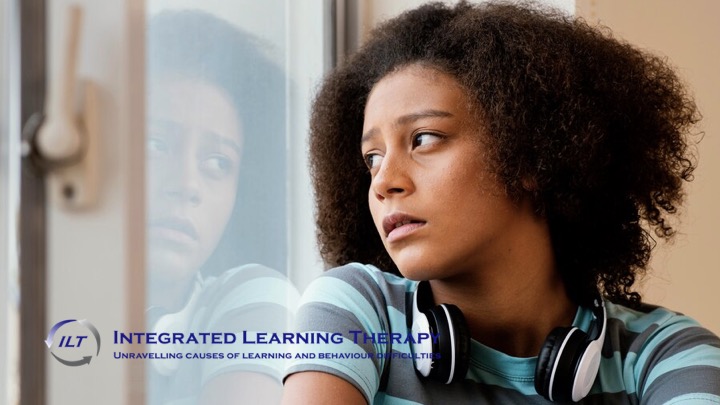
The symptoms typically associated with ADHD include difficulty focusing, completing tasks, acting impulsively and high levels of activity.  In addition, many show problems regulating emotions. These show up as depression, anxiety and anger outbursts. 

In a recent research publication in Nature Mental Health Cambridge scientists describe how they found that as many as one in two children diagnosed with ADHD show signs of emotional dysregulation and believe that emotional problems may be a core symptom of ADHD.  In addition, they found that Ritalin – the most commonly prescribed medication to control the condition – does not seem to be effective at treating this.

The number of children presenting with the symptoms of ADHD seems to be increasing and these days, more adults are being recognised as having the type of problems associated with the disorder.  Including these are self-control problems, which affect their ability to regulate emotions.  The study mentions that one is 50 children diagnosed with ADHD also experience mood disorders, such as depression, while more than one in four experience anxiety.  Verbal or physical outbursts are common, due to their inability to control and regulate emotions.

These problems were thought to be a result of other symptoms associated with ADHD, such as problems with cognition and motivation. But this latest study shows that emotional dysregulation occurs independently of these.

Professor Sahakian, a lead researcher wrote that “Parents and teachers often say they have problems controlling children with ADHD, and it could be that when the children can’t express themselves well—when they hit emotional difficulties—they may not be able to control their emotions and have an outburst rather than communicating with the parent, teacher or the other child.”

Professor Sahakian hopes that acknowledging emotion dysregulation as a key part of ADHD will help people better understand the problems the child is experiencing. This could lead to using effective treatments for regulation of emotion, such as cognitive behavioral therapy.

The findings may also point to potential ways to help the child manage their emotions, for example by using cognitive behavioral techniques to learn to stop and think before they react and to express their feelings verbally, or use techniques such as exercise or relaxation to calm themselves or alleviate symptoms of depression and anxiety.

Identifying the problem earlier would allow for alternative, more effective interventions to help the child better manage their emotions, potentially helping the individual in adulthood.

While it is not clear exactly what causes these problems in the first place, the researchers found signs of a link to possible dysfunction of the immune system, with individuals who exhibited signs of emotion dysregulation showing higher percentages of certain types of immune cell.

Professor Sahakian added, “We already know that problems with the immune system can be linked to depression, and we’ve seen similar patterns in individuals with ADHD who experience emotion dysregulation.”


More information: Wenjie Hou et al, Emotion dysregulation and right pars orbitalis constitute a neuropsychological pathway to attention deficit hyperactivity disorder, Nature Mental Health (2024). DOI: 10.1038/s44220-024-00251-z

Journal information: Nature Mental Health 

Provided by University of Cambridge 


Image supplied by Freepik

Is your child suddenly resisting ‘chunky’ foods?

Is your child suddenly resisting ‘chunky’ foods?

We know how some children become fussy eaters after the age of two but now research has shown that some might unexpectedly start to resist certain textures in foods around the age of six.

A study by the University of Copenhagen’s Department of Food Science revealed that at about this age, children prefer smooth foods and avoid crunch.  This includes pieces of fruit in their yoghurt, whole peanuts in peanut butter, berry pieces in jam and so on.  But don’t worry – this is a phase that will most likely pass.

In the study, 76% of 6-year-olds showed a preference for foods without lumps.

Is this a protective measure?

According to Ching Yue Chow, a lead researcher, there may be an explanation for why children’s avoidance of complex texture in food peaks around the age of six.

“Food neophobia is often described as the reluctance to eat new or unfamiliar foods. It is thought to be a protective function to prevent children from eating potentially poisonous foods or other dangerous things when they start to become more independent. Studies have reported that food neophobia starts from a low baseline at weaning. It increases sharply as a child becomes more mobile and independent, reaching a peak at around 6 or 7 years old.

“As such, it makes sense that this particular group in our study does not like too many lumps in food, as it is at this age that they are most cautious when it comes to food,” explains Chow.

Children’s food preferences do mature with age and they become more willing to try new foods between the ages of 7 – 12 years.

Changing their tastes

Once children have passed the critical age of six, it may be time to encourage them to accept chunky foods.  This means trying again and again to get them to accept the previously avoided foods – often up to 15 times.

“A lot of research on children and foods shows that repeated exposures to new dishes have a positive effect on whether they’ll bother eating them. Specifically, it is about giving children the opportunity to taste new food while there is something on the plate that they already know. Often they need to be presented with the new dish 8–15 times before they develop preference for it, but persistence pays off,” Chow recommends.

Try to resist the urge to offer rewards for eating foods they resist.  “Rewarding a child with an ice cream if they eat their broccoli, is a very short-term strategy. Because the moment you remove the ice cream, they don’t want to eat the healthy foods. At the same time, you shouldn’t pressure a child or try to force them to eat certain things, because you risk that they will eat the new food even less than before because they associate it with something negative,” says Chow.

The new research results shed more light on the food preferences of children between the ages of five and twelve, which the researcher hopes can make parents and the food industry wiser about our relationships with food.

Article published in the Journal of Texture Studies (2024).

 Image supplied by Freepix.


Is your child a perfectionist? How to help.

Is your child a perfectionist? How to help.


The world needs perfectionists.  We appreciate this trait in our brain surgeon, the person responsible for building our home, the person working on the assembly line of our next car. Yet extreme perfectionism brings its own challenges to individuals. We see the signs of developing perfectionism in some young children: those who refuse to colour in because they can’t keep between the lines, or those who try to avoid a school task because it seems too daunting to complete to their exceptionally high standards.

The more extreme forms of perfectionism can be exhausting and unhealthy for some children.  If they can’t cope with a flawless performance, they become extremely self-critical, which prevents them from actually accomplishing what they would otherwise like to do.

Perfectionism has been divided into two forms (Westrupp, King and Sheen, writing for The Conversation):

  1. Perfectionistic strivings, characterised by a determination to meet goals and achieve highly
  2. Perfectionistic concerns, shown when a child frets about being able to meet high standards, and self-criticism about performance.

While perfectionistic strivings can be positive and lead to high achievement, perfectionistic concerns can lead to a higher chance of children developing eating disorders or anxiety and depression, and having lower academic achievement.

You can help by trying to develop a growth mindset rather than a fixed mindset in your children (Ginsburg, American Academy of Pediatrics).  He writes that praise and criticism can lead to a “fixed mindset,” rather than a healthier “growth mindset.” For example, when children are constantly praised for being ‘smart’ or ‘clever’ they are more likely to grow to fear being seen as anything else, while those who receive approval for the effort they put into their tasks develop a passion for growth.

Young people with a growth mindset believe their intelligence can be developed with effort. When they don’t do something as well as they hoped, they don’t see themselves as failures, but as learners. In contrast, people with a fixed mindset (including perfectionists) may believe people are either smart or not, and that failure proves you’re not. They may even believe that having to work hard at something suggests a lack of natural intelligence.

People with a growth mindset feel successful when they can do something they couldn’t do before, whereas those with fixed mindsets feel successful when they avoid errors or task that seem too challenging.

To help your child build a growth mindset, praise the effort, rather than the product.  Do be mindful of the amount of time the child needs to put effort into a task.  Time and energy spent on a project may deprive them on needed sleep, exercise, play or social time.  They need to learn how to balance the demands of their daily lives otherwise they could feel overwhelmed and find it difficult to focus on any one activity.

Ginsburg suggests that the best antidote to an unhealthy sense of perfectionism is unconditional acceptance.  The most essential ingredient in raising resilient children is the connections you create when you love or accept your children unconditionally and hold them to high but reasonable expectations.  School results or performance should not be the focus of your expectations but rather effort, integrity, generosity, empathy and other attributes valued by our societies.


Image supplied by Freepix.

Good news for bilingual families

Good news for bilingual families


In South Africa, many families are bilingual with some children even learning more than two languages at an early age.  There has been uncertainty as to the effect of being bilingual on language development, with some advocating for the use of a single language in the home during early years of development.

More recently, however, there has been a shift in this thinking.  A study, headed by Athanasia Papastergiou, Lecturer in the Linguistics department of Bangor University, published in the journal Behavior Research Methods, reports on an innovative way of examining thinking skills in school-aged Greek-English bilingual children in the UK.  The bottom line is that they found superior thinking skills in those who spoke two languages.

“It is very exciting to develop this new approach to the study of bilingual children. I hope that these positive results will help to allay any possible fears about bringing up children bilingually and highlight the benefits of doing so.”

The benefits of learning two languages

The findings show that learning two languages can have benefits for children’s development.  For example, they asked children to remember and repeat as many numbers as they could, to ignore irrelevant information, and to shift quickly between different tasks. Bilingual children were better overall than monolingual children.

The team will now expand its research to other languages.

Image supplied by Freepik

More information: Athanasia Papastergiou et al, The executive function of bilingual and monolingual children: A technical efficiency approach, Behavior Research Methods (2021). DOI: 10.3758/s13428-021-01658-7


Do you label you child?

Do you label you child?

There is a widespread tendency to use words to label children.  How often haven’t you referred to a child as ‘clever’, ‘naughty’, ‘lazy’, etc.  We might think that we are helping them recognise their attributes or deficits but in fact, we could be holding them back.

Monteserrat Gutiérrez and Paula Carvacho writing for The Conversation, say that there is a delicate balance between encouraging and uplifting a child and damaging their self-esteem.  We need to be so careful of how our words affect the children who hear them.

Labelling

The term labelling generally refers to how we classify or describe the identity of people who deviate from what is considered normal or appropriate.  Whether positive or negative, a label implicitly judges how far a person strays from the expectations of a society.

How does labelling impact on development?

We generally consider labels to fall into one of two categories: positive or negative. Negative labels obviously can influence a child’s perception of themselves.  If a child is constantly told that they are ‘stupid’, ‘slow’, ‘useless’ and so on, they will come to believe that these are permanent traits.  It will be very difficult to change their self-beliefs at a later stage. 

Over time, their self-beliefs can affect their behaviour and personality, ultimately leading to a negative self-esteem and feelings of inferiority.

On the other hand, positive labels can be just as bad.  Calling a child ‘clever’ means that we emphasise their achievements and connect their intrinsic worth with their performance.  This may mean that a drop in performance might lead them to believe that they have dropped in their value as a person.

In this light, it might be a mistake to believe that constant praise in terms of positive labelling will give children a boost of self-esteem.  A child used to thinking they get good marks at school because they are clever, for example, may end up with a fear of failure, and be more prone to frustration and overexerting themselves.

How then do we convey the message that something has been done well, or that we think an action or behaviour is commendable? The key lies in linking labels to the process rather than the outcome, especially in academic settings. We can, for example, show our pleasure or admiration with the degree of involvement or effort that a child invested in a task, rather than the mark achieved.

Labels may define what we become

Labels have the power to define what an individual will become. They directly impact our beliefs about our abilities, meaning an individual, once labelled, will expect the same outcome from themselves in similar situations.  For example, a child who grows up to hear that they are ‘hopeless at maths’ will be reluctant to tackle figure-based tasks even as an adult.  In this way, labels become self-fulfilling prophecies.

The Pygmalion effect

In psychology, the Pygmalion effect refers to the potential influence that one individual’s belief—often a teacher, parent or leader—can have on another’s performance. This phenomenon can be observed when repeated labels are internalized by an individual, becoming part of their reality that is then taken for granted.

There seems to be a link between labelling a child and this effect.  If a child’s behaviour or beliefs are based on external judgements of who they are, they will end up confirming and reinforcing them through their behaviour and expectations of themselves.

Keep in mind the power of words

We need to resist describing and categorising children by their abilities or personal traits. Instead, we can address children’s issues in a way more supportive of their healthy development. 

For example, a child may struggle to keep their room tidy. Instead of saying “you’re so untidy,” we can offer to help them organise or tidy up, or say something along the lines of “try and tidy your room, I’m sure you can handle it but let me know if you need a hand.”

We can also highlight a person’s unique worth by statements such as “you are special to me”. If we want to tell a child they are good at a particular task without rewarding mere obedience we can say something like “I love how much effort you put into doing that” or “I saw you sharing toys with your friend, that was nice of you.” Instead of saying “you’re talented” we can say “I can tell you like drawing. Would you like to try out some new techniques or colours?”

Importantly, praise and positive reinforcement should come at the same time that the action happens: by giving immediate recognition we reinforce the connection between a behaviour and its positive response. In this way, praise or rewards are linked to the action itself, and not to the child’s identity, personality or intrinsic worth.


Provided by The Conversation 

Image supplied by Freepik


How stories help children understand pain

How stories help children understand pain

A recent study conducted by Dr Sarah Wallwork and published by the University of South Australia shows unexpected benefits for children of hearing and reading stories.   Not only do they learn about the concept of pain, such stories help their emotional development, their development of empathy, and understanding of the norms of their socio-cultural environment.

The study looked at how parents and caregivers interact with children (aged 3-6) when looking at picture books that deal with characters being injured or otherwise hurt.  Such situations often prompted some discussion about causes of pain and injury, what to do when one is injured or in pain and the need to feel empathy and show prosocial skills.

Dr. Wallwork says that the study highlights the value of shared reading experiences and how parents can support their children to learn about pain-related concepts during a critical developmental period.

“Through the storybooks’ characters we found parents and caregivers would pause to further explain what was happening within the pages.

“For example, when Zog the dragon (in Julia Donaldson’s book Zog) bumps his head and gets a bandage, the parent said ‘Whoopsie daisy, because dragons are still learning, aren’t they?’ which linked the injury with learning and that it was normal to make mistakes when you were learning.

“Similarly, when Zog flew into a tree, the parent said ‘Oh no! That would’ve hurt, wouldn’t it?’ which prompted the child to think about how painful or sore or hurt Zog might be. In this way, the parent is teaching the child about empathy, and appropriate responses.

“Conversely, when pain and injury were depicted in a light-hearted or unrealistic way, parents often responded in a way that showed they were entertained by the character’s misfortune. And while this may seem harmless, the action could inadvertently socialize children to think that accidents and injuries can be funny.

“Learning appropriate and empathetic responses to pain and injury in childhood are valuable for many reasons: they help children learn to understand that some pain is fleeting, that some injuries need the help of others, and that injury and pain are not always intertwined.

“Shared reading of picture books is an ideal way to talk about concepts around pain due to its didactic nature—as opposed to children’s television and movies, where children are often watching on their own and become passive recipients of information.

“Connecting the narrative and the characters’ experiences to a child’s own experiences makes these concepts more relatable for children.

“Essentially, we’re translating learning from the picture books into their own real-life. It all starts with the turn of a page.”


More information: Sarah B. Wallwork et al, Harnessing Children’s Picture Books to Socialize Children About Pain and Injury: A Qualitative Study, The Journal of Pain (2024). DOI: 10.1016/j.jpain.2024.03.016

Journal information: Journal of Pain 

Provided by University of South Australia 

Image supplied by Freepik