Building blocks for healthy self-esteem in kids

Building blocks for healthy self-esteem in kids

There is no doubt that a child’s confidence levels contribute to her school achievements and ability to fit in easily to different social situations. Feeling good about yourself is a powerful motivator to tackle the challenges offered by school and life in general.

Self-esteem has to do with a child’s own beliefs about their ability to meet expectations and achieve in ways important to them.   We all have a sense of an ‘ideal self’ and having a positive self-esteem helps us to become closer to that ideal goal.

A child’s self-esteem is shaped by the way they feel about themselves but a large part relies on the perceptions and expectations of significant people in their lives, such as their parents, family members, teachers and friends.

Susan Buttross, MD, FAAP, a Developmental and Behavioural Pediatrician, describes some of the elements of a healthy self-esteem.

A sense of security and belonging. A  child must feel secure about themselves and their future. Your child also needs to feel accepted and loved by others, beginning with their family and extending to groups that they view as important to them, such as friends, schoolmates, sports teams, houses of worship and even their neighbourhood or community. Without this feeling of acceptance or group identity, they may feel rejected, lonely and adrift.

A sense of purpose. Your child should have goals that give them purpose and direction. Goals can provide an avenue for channeling their energy toward achievement and self-expression. If they lack a sense of purpose, they may feel bored, aimless, or resent being pushed in certain directions by you or others.

A sense of personal competence and pride. Your child should feel confident in their ability to meet challenges in their life. A sense of personal power evolves when your child has successful experiences with solving problems independently and being creative and seeing results for their efforts.

It’s important to set appropriate expectations for your child. This helps them develop competence and confidence. If you hover or overprotect them, they will likely become too dependent on you; if expectations are so high that they never succeed, they may feel powerless, defeated and incapable.

A sense of trust. Your child needs to feel trust in you and in himself or herself. To build trust with them, you should keep promises, be supportive and give your child opportunities to be trustworthy. This means treating your child as an honest and truthful person.

A sense of responsibility and contribution. Your child needs to develop a sense of importance and commitment. Give your child a chance to show what they are capable of doing. Allow them to take on tasks without being checked on all the time. This shows trust on your part, a sort of “letting go” with a sense of faith. Help them by providing opportunities to participate and contribute in a meaningful way to activities. Let your child know that they really count.

A sense of self-discipline and self-control. As your child strives to gain more independence, they need and want to feel that they can make it on their own. Give them expectations, guidelines and opportunities to test themselves. This lets them reflect, reason and problem-solve. It also lets them consider the consequences of the actions they may choose.

A sense of encouragement, support and reward. Beyond achieving goals, your child also needs positive feedback and recognition. This sends a message that they are doing well, pleasing others and “making it.”

Encourage and praise your child not only for achieving a set goal, but also for their efforts. Be sure to recognize even small changes and improvements. Give them feedback as soon as possible. This will promote a continued effort and reinforce their self-esteem and help them connect your comments to the activity involved.

A sense of accepting mistakes and failures. Your child needs to feel comfortable and supported, not defeated, when they make mistakes or fail. Explain that these setbacks are a normal part of living and learning, and that they can learn from them. Use examples from everyday life to model these skills — when you yourself make a mistake, when appropriate, share what happened with your child so they can see you move beyond it.

A sense of family self-esteem. Your child’s self-esteem first develops within the family and is influenced greatly by the feelings and perceptions that a family has of itself. Families that fare better focus on each member’s strengths. They avoid excessive criticism and stick up for each other outside the family setting. They believe in and trust each other and respect their individual differences. And they show their affection for each other and make time to be together, whether to share holidays, special events or just to have fun.

Supplied by 2025 Tribune Content Agency, LLC.

Image supplied by Freepik.
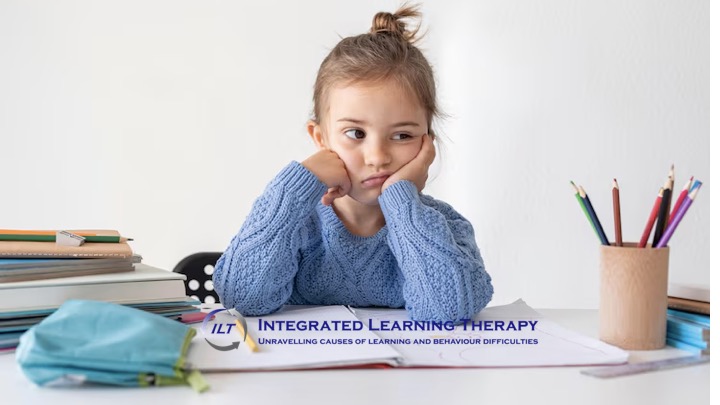
Does your child procrastinate?

Does your child procrastinate?

Adults can be said to procrastinate when they meet one of five criteria for defining procrastination: there is an intention to perform the task; the task is delayed; the delay is voluntary; the delay is unnecessary; and they are aware that this may lead to future negative outcomes.

These can’t be applied to children in different stages of development.  It’s not uncommon to catch preschoolers dilly-dallying when they’re supposed to be tidying or school-aged children putting off homework for more desirable tasks.

Brock Professor of Psychology Caitlin Mahy is studying procrastination in childhood and has described children’s typical procrastination-type behaviours in various stages, beginning with preschoolers (ages two to four), who put off tasks and household routines; older preschoolers (ages five and six), who delay doing homework and household chores; primary school children (ages seven to 13), who experience an increase in academic procrastination; and high school teens (ages 14 to 18), for whom procrastination is prominent at school as competing demands on time increase.

These may be early indications of a tendency to procrastinate as adults, so it is understandable that parents may want to help children prevent forming a habit of postponing challenging tasks. 

For those parents, Mahy offers these tips:

  • Use a “starting ritual” such as a countdown or the “Pomodoro technique,” which involves five-minute breaks after 25 minutes of doing the task.
  • Clear distractions, such as toys or screens, in the immediate environment.
  • Break down longer-term deadlines into shorter tasks and chunks of time.
  • Make tasks more fun to do and accomplish.


More information: Caitlin E. V. Mahy et al, Mutual implications of procrastination research in adults and children for theory and intervention, Nature Reviews Psychology (2024). DOI: 10.1038/s44159-024-00341-w


Image supplied by Freepik

Goal-directed learning: Its value for adolescents

Goal-directed learning: Its value for adolescents

Goal-directed learning is when we experience something that motivates us to try it again.  Perhaps the experience is a bad one, in which case, we might avoid a repetition.  So goal-directed learning guides us to whether we want to repeat an experience.

This form of learning is particularly relevant for adolescents. Juliet Davidow, assistant professor of psychology at Northeastern University offers these insights.

 The teen years is an incredible time for growth, for self-discovery and developing a sense of who one wants to be in adult life.  According to an article published in Nature Reviews Neuroscience, goal-directed learning is one of the central processes happening during this period.  It states that adolescents learn to perform actions that enable them to obtain desired outcomes; it is gradual experiential, trial-and-error learning.

In the past, goal-directed learning would have included such skills as hunting, foraging and child-care, but today the brain has to face the modern world and our current socio-cultural climate.  It involves more abstract behaviour, such as the clicking and swiping actions needed to operate Spotify to play music than produces a desired emotion.

Teenagers learn faster than adults, especially if they are learning something that’s important to them, not something that they are told to learn.  In other words, motivation is a big part of goal-directed learning and the goal needs to be something that is desired if it is going to work.  A good outcome encourages the adolescent to repeat an activity.

Another important part of the learning process, besides motivation, is surprise.  If an adolescent does something and the outcome is surprising, the brain will hold on to that information and do something with it.  In order to be surprised, however, the person must first have an expectation, otherwise they can’t be surprised.

When something doesn’t go as expected, the brain is going to try to process why. This creates a goal-directed learning cascade, Davidow says.  So, for example, parents or teachers could ask a child what they think will happen before the child tries something.

“If (the result) is surprising, it’ll make that learning stronger,” Davidow says.

Sometimes parents think their teenagers seek out risky experiences that can lead to a bad outcome, she says but that maybe because they’re looking for input. According ot Davidow, “They’re looking for an experience and it just so happens that the experiences they’re finding tend to be these risky, dangerous ones.”

Instead, she says, adults could create situations to allow their teenagers to safely explore outcomes—such as sending them off into nature with supervision.

To start a positive cycle, youngsters have to try out new things.  This is the only way they will know whether trying things makes them feel good and motivate them to continue.

Violence on TV: What happens to children who watch?

Violence on TV: What happens to children who watch?

A study led by Linda Pagani, Professor at the Université de Montreal’s School of Psychoeducation, reveals long-term associated risks of early exposure to violent content in childhood and teen antisocial behaviour, more than a decade later.

Past research has shown that watching violence had an immediate impact on aggressive behaviour in 4-year-old children but there are few studies investigating long-term risks.  This new study wanted to see whether watching characters receiving rewards for violent actions as 4-year-olds would still be influencing the behaviour of the children in mid-adolescence.

Close to 2,000 children

The subjects for the study were typically developing middle-class children.  As a population, they appear to have the lowest changes of engaging in aggression and behaviour harmful to others.

In all, the researchers looked at 963 girls and 982 boys born between the springs of 1997 and 1998 who were enrolled in the Quebec Longitudinal Study of Child Development. Parents reported the frequency of their child’s exposure to violent television content at ages 3.5 and 4.5 years old. Boys and girls then self-reported on several aspects of antisocial behaviour at age 15.

The study defines screen violence as anything “characterized by physical aggression, verbal aggression, and relational aggression […] depicting situations that intentionally attempt or cause harm to others.”

Children, the study says, “are attracted to fast-paced, stimulating, violent content, which often features appealing characters like superheroes who commit and are rewarded for aggressive acts, thus increasing the likelihood of exposure.”

The researchers then conducted analyses to examine whether exposure to violent television content at ages 3.5 and 4.5 years predicted later antisocial behaviour eleven years later.

Boys stand out

At age 15, for boys only, preschool violent televiewing predicted increases in antisocial behaviour. Being exposed to violent content in early childhood predicted later aggressive behaviours such as hitting or beating another person, with the intention of obtaining something, stealing, with or without any apparent reason.

Risks also included threats, insults, and gang fight involvement. The use of weapons is also among the behavioural outcomes predicted by exposure to childhood television violence in this study. No effects were found for girls, which was not surprising given that boys are generally more exposed to such content.

This study provides compelling evidence that early childhood exposure to media violence can have serious, long-lasting consequences, particularly for boys. This underscores the urgent need for parents and communities to be informed about the long-term risks and empower them to make informed choices about young children’s screen content exposure. It is parents and communities that can play a crucial role in limiting future problems by making sure children avoid exposure to violent media content.


Supplied by the University of Montreal

Image supplied by Freepik


More information: Linda S. Pagani et al, Prospective Associations Between Preschool Exposure to Violent Televiewing and Externalizing Behavior in Middle Adolescent Boys and Girls, International Journal of Environmental Research and Public Health (2025). DOI: 10.3390/ijerph22010129

Journal information: International Journal of Environmental Research and Public Health 


Learning difficulties? How we can rewire the brain

Learning difficulties? How we can rewire the brain

The brain has gazillions (is that a word?) of neurons – that we call ‘wires’ – and these neurons need to communicate with each other so that we can function.  This means that there are trigazillion (my new word) connections in the brain.  It is rather remarkable that most of us manage to form these neurons and their connections without faults but we need to remember that there are many things that can go wrong.

Thanks to research, we’ve had confirmation that things suspected through observation and experience are facts.  We now know that by carefully watching how a child moves and what a child needs to do to meet an expectation from school or his home, we can get an idea of where in the brain the problem lies.  Then, by giving the child’s brain a chance to repair itself, we can bring about positive changes.

This isn’t up-to-date news.  Way back in 1996, a writer in an edition of Newsweek focusing on Your Child’s Brain wrote “…. There is new evidence that certain kinds of intervention can reach even the older brain and like a microscopic screwdriver rewire broken circuits.”  This was about the time that I was researching ways of helping children – giving rise to ILT in the year 2000.  You can imagine my excitement!

So today let’s have a look at an example of how we apply neurodevelopmental insights to solve a child’s learning problem.

 An important reflex movement

It’s significant that many children with learning difficulties have no Headrighting Reflex (HRR).  This reflex shows when the angle of the body in relation to the ground shifts – in other words, the body tilts to either side, backwards or forwards.  The reflex automatically adjusts the head to remain in a nearly vertical position.  In a less well coordinated child, the head does not remain or immediately return to the vertical position but stays in line with the body. In other words, the child’s head moves in line with his spine.

If the head rights itself, there is very little shift in the background compared to when the head tilts in line with the spine.  (Try this yourself by swaying to each side, alternately keeping your head still in a vertical position and allowing it to align with the spine.)   Such a child will find himself in a constant state of visual strain because one of the reasons for this reflex is to stablise visual images on the retina of the eye.   There is little wonder that children who don’t have this reflex may have reading problems.

Giving a child the HRR

 This is where a knowledge of neurodevelopment can help.  We need to give children a HRR if they haven’t developed one themselves.  How do we do this?

 Different parts of our bodies are controlled by different nerves but it is wise to remember that nothing stands alone.  No function of the brain operates in isolation.  For example, when your vestibular system (in your inner ear) is stressed (perhaps by movement), you get seasick. You feel this in your tummy and it happens because of the intimate interconnectedness of different nerves.  The vagus, one of the ten cranial nerves, is responsible for causing your stomach to revolt against the movement registered by an overwhelmed vestibular system.

The HRR is influenced by another cranial nerve that controls the trapezoid muscle.  This muscle controls the movements of the head and neck.  If a child hasn’t developed the HRR, it is likely that there is a poor connection between the trapezoid muscle and the cranial nerve that controls it.  Our job would be to connect this muscle and we use a seemingly simple movement activity to do so.

 The original movement came from Carl Delacato, who worked for many years with learning disabled children.  He found that having children lie on the floor and moving their arms, legs and head in a way that resembled the movement of a ghecko or lizard, caused significant and positive changes in the brain.

The Flip Flop movement

The benefits of the Flip Flops are many.  Information goes into both sides of the brain as the muscles move equally on both sides.  At the same time the brain gets sensory information from the weight of the body moving across the surface on which the child is lying.  This is very important because during later development the brain is constantly having to coordinate information received from the two brain hemispheres to allow for stereophonic hearing, posture and vision.  So with our Flip Flops, we are not only stimulating the cranial nerve to connect to the trapezoid muscle but also influencing vision, hearing and balance.  Through this, information is communicated to many other brain areas, especially to the cerebellum, the midbrain and the thalamus.  The thalamus is an area of the brain that acts as a gate-keeper – either allowing sensory information to pass through to higher brain (cortical) areas or not.  If it fails to allow certain information through, the important messages will not arrive at the proper destination. 

So in short, by giving a child a  (seemingly) simple activity, we are effecting profound changes in brain function.   We can’t control what comes out of the brain but we certainly can control what goes in.  This helps the brain receive the information it needs to correct faulty wiring.

Other reflex movements are significant too

Giving the child a head-righting reflex is good but we need to test for later developing movements as well.  Once we’ve made connections in the lower brain regions, we have to persevere to encourage connections needed for more sophisticated functions. 

When you bring about better neurological organization, you are addressing basic problems in the various areas of the brain.  This enables the child to function independently and with improved abilities in many different spheres of life.  Such children seem to ‘get it together’ and with this, their self-esteem and confidence soars.

Image supplied by Freepik

Pollution may harm children’s learning and memory

Pollution may harm children’s learning and memory


A new study from the University of Southern California, involving 8,500 children from across the USA, has revealed that a form of air pollution, largely the product of agricultural emissions, is linked to poor learning and memory performance in 9 and 10 year-olds.

Ammonium nitrate Is the specific component of fine particle air pollution (PM2.5).  It, is also implicated in Alzheimer’s and dementia risk in adults, suggesting that PM2.5 may cause harm to brain function across the lifespan. Ammonium nitrate forms when ammonia gas and nitric acid, produced by agricultural activities and fossil fuel combustion, respectively, react in the atmosphere.

PM2.5: A danger to the lungs

PM2.5, a key indicator of air quality, is a mixture of dust, soot, organic compounds and metals that come in a range of particle sizes less than 2.5 micrometers in diameter. PM2.5 can travel deep into the lungs, where these particles can pass into the bloodstream, and bypass the blood-brain barrier, causing serious health problems.

Fossil fuel combustion is one of the largest sources of PM2.5, especially in urban areas, but sources like wildfires, agriculture, marine aerosols and chemical reactions are also important.

In 2020, an earlier study did not find a relationship between PM2.5 as a whole, and its potential impact on cognition in children. For this study, however, they used special statistical techniques to investigate 15 chemical components in PM2.5 and their sources. That’s when ammonium nitrate—which is usually a result of agricultural and farming operations—in the air appeared as a prime suspect.  The most robust finding was that ammonium nitrate particles were linked to poorer learning and memory.

 More information: Kirthana Sukumaran et al, Associations between Fine Particulate Matter Components, Their Sources, and Cognitive Outcomes in Children Ages 9–10 Years Old from the United States, Environmental Health Perspectives (2024). DOI: 10.1289/EHP14418

Journal information: Environmental Health Perspectives 


Provided by Leigh Hopper, University of Southern California 

Image provided by Freepik