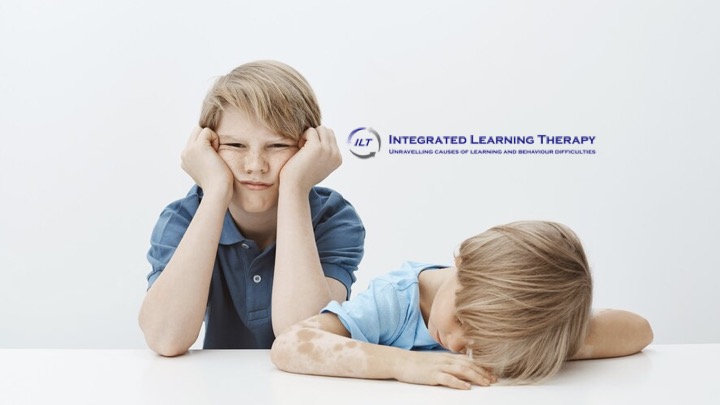
School reluctance or refusal – what’s the difference?

School reluctance or refusal – what’s the difference?


Rachel Leslie, Annette Brömdal, Cris Townley and Glenys Oberg, writing for The Conversation, explain the difference between school reluctance and school refusal and give tips to help children cope.

School relucatance

Most children will show reluctance to attend school on occasion. This might be due to a stressful event, such as a test or a spat with a friend and is temporary. This is called ‘school reluctance’ and might be accompanied by complaints of a tummy ache, headache or clinginess. In response, parents can help by validating the child’s feelings, like saying ‘I can see you are worried about having to write the test today’.  When the child endures the stressful event, parents can reinforce motivation and confidence by expressing admiration for the child showing courage and ability.

School refusal

In other cases, when a child feels overwhelmed by stressors that make attending school threatening or impossible, they may show ‘school refusal’.  This is clearly more serious and may be indicated by the following:

  • spending significant portions of the school day in the office or sick bay
  • extreme difficulty in getting ready in the morning, even with basic tasks such as dressing or making breakfast
  • physical symptomssuch as nausea or dizziness that worsen on school days, but may also be evident on weekends
  • persistent absences from school, even with encouragement and support
  • extreme emotional reactions—crying, anger or complete withdrawal—when school is mentioned.

School refusal is closely associated with social anxiety, separation anxiety and school anxiety. This anxiety can become overwhelming and trigger a child’s need to avoid the environment that is causing them emotional distress.  This causes stress in families and can have negative impacts on a child’s academic progress, social skills and general well-being.

Supporting the child

If your child is refusing or can’t go to school, they need empathy and support. You can try the following:

  • seek professional help.A psychologist may help uncover and address the root causes of their distress
  • work with the school.Talk to teachers and staff about accommodations such as flexible schedules or sensory breaks, and how else they may offer inclusive, affirming and supportive learning environments
  • think outside the box.This can include prioritizing well-being over attendance. Consider a break from schooling or alternative forms of education, which may suit your family better
  • seek support from other families.You are not alone—there are many other families who share this experience.


Provided by The Conversation 

Image provided by Freepik
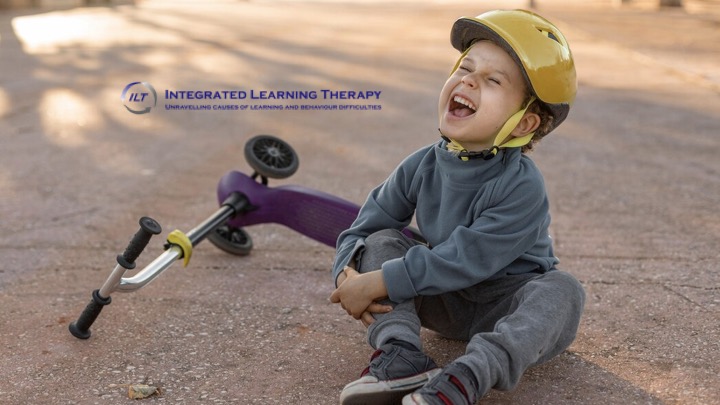
Helping your child learn to try and try again

Helping your child learn to try and try again

We’re all taught as children that ‘failure is a rehearsal for success’ and how important it is to not be discouraged if we initially find some goals difficult to achieve.  As adults, we know the value of perseverance and admire those who have grit and determination.  But how do we pass this on to our children?

Here are some tips from Dr Angela Mattke, a paediatrician at the Mayo Clinic Children’s Centre, aimed at helping children learn to try and try again:

  • Make sure your child knows that the process of learning a skill can be as important as the skill itself, and that failure isn’t something to be feared or avoided.
  • Help your child see failure as a natural byproduct of learning and experimenting with new things.
  • Acknowledge when a situation stinks. Let your child know that it’s OK to be disappointed or upset.
  • Encourage your child to think about how to deal with the loss or how to get better.
  • Share stories about times that you failed and what you learned from the experiences.
  • Let your child see you try new things, even if it’s something you’re not good at.


Image supplied by Freepik.


Is your pre-schooler being identified as ‘ADHD’?

Is your pre-schooler being identified as ‘ADHD’?


It’s come to my attention that quite a few very young boys are being described as ‘ADHD’ or hyperactive.  They seem to be regarded as being overly ‘busy’, mainly by their preschool teachers.  Are we forgetting that most young children are highly active, energetic and generally spend much time ‘on the move’?   My long years of experience have shown that highly active young boys generally settle down as they grow, perform well at school and fail to develop any attention or other learning related problems. 

So why are teachers sometimes labelling youngsters incorrectly?  Perhaps we need to consider how they come to this decision and consider what other aspects may be contributing to the children’s inattentive behaviours.

 A child who fails to concentrate in one situation is in danger of being seen as a child who can’t concentrate in any situation. If a child doesn’t sit still he is in danger of being called hyperactive. His parents might be panicked into believing hyperactivity and poor concentration are permanent conditions which will need specialist treatment, including medication.

 Highly mobile youngsters may show a disinclination to sit down and engage in table tasks.  Their preference will be for outdoor play, usually very physical.  Or others may seem to dislike concentrating on teaching materials, rejecting colouring-in, crafts, puzzles and so on.  They prefer any number of other games or activities that are enjoyed at home.    Boys in particular need to be physically engaged and take much longer to adapt to more sedentary tasks.  They may not want to concentrate on the teaching events, listen to stories sitting quietly in a circle, or follow the teacher’s instructions.

Check his concentration

You can check whether your child can concentrate by giving him something to do which he enjoys doing, and which takes concentration.  If your child can pay attention to the activity for at least five minutes you will know he can concentrate (and sit still).  It’s important to emphasise that if someone can concentrate in one situation, then the problem is not an inability to concentrate.  If your child’s attention wanders before the five minutes have passed, maybe he does need your help.  The nature of the help will depend on your assessment of the situation so let’s consider some relevant points.

  1. Have realistic expectations.  Some children seem to be able to concentrate better than others.  If you compare one child to others, you may be unrealistic in terms of what he can and can’t do.  Instead, compare what your child is doing this week with what he was doing last week; how he behaved when he went to bed last night; how he played with other children at school compared with how he plays with them at home. When you focus on your individual child and notice changes in his behaviour, it helps avoid becoming trapped into thinking that your child has a problem simply because he’s different from others.
  1. Avoid using checklists.  Checklists can convince you that your child has a serious problem because they can be so all inclusive that parents or teachers will find something on the list that applies to that child.  They make you feel they are describing unusual behavior but often they are only describing things that every child will do sometimes.  Checklists for ADHD can include the following questions:
  • Does your child forget instructions?
  • Does your child have a short temper?
  • Does your child fidget?
  • Does your child constantly ask questions?
  • Does your child leave his bedroom untidy?
  • Does your child produce messy work?

Doesn’t this look like a list of the stages that all children go through and outgrow?

  1. Does your child know how to pay attention?  Some children will seem to pay attention automatically.  However, every child learns differently and for some, the ability to attend doesn’t come naturally. They need help in learning to concentrate and the good news is that concentration can be taught. For children to learn concentration, they must be given responsibility, must feel that their contribution to family life matters and must have the chance gradually to develop the skills everyone needs in order to be able to function successfully.
  1. Does your child only pay attention when it suits him?  The reason for this may be because what he should be doing is: too difficult, too boring, too tedious or not clearly understood.  The child will simply try to get out of something he doesn’t want to do or feels incapable of doing.  This avoidance behavior needs investigating and a good place to start is to find out whether or not he understands how to learn or how to approach the task given.  If children are not expected to learn to do things at home, they may struggle to learn at school.  Setting the dining table is a good example of an age-appropriate task that can be used to teach a young child to learn.  It’s a simple everyday activity but it needs a system.  While busy, your child will have to keep thinking until the job is done.   Having chores to do at home are good learning opportunities that have unexpected spin-offs!

What to do?

If reports from school concern you, don’t ignore them but don’t overreact either.  First do your own assessment of the situation and then, if need be, find a helping professional that will look holistically at the situation.   While most of the younger boys suspected of having ‘ADHD’ will not need intervention, some might well benefit from help.  Unusual behaviours can have many different causes – which is why ILT practitioners are taught to consider all possibilities.  The website www.ilt.co.za contains more information and sources of help.


Do your children fight all the time?

Do your children fight all the time?

We tend to believe that siblings provide companionship for each other, and that only children are more lonely.  The truth is that many parents find it difficult to handle the constant squabbling that takes place between brothers and sisters.  Rachael Sharman, writing for The Conversation, discusses this sibling rivalry.

Sibling rivalry

In an everyday sense, bickering among siblings is a developmentally normal expectation. This allows children to work out differences among themselves, develop skills in negotiation, conflict resolution and emotional regulation.

When you look at it this way, squabbling can even be seen as a positive. Even if parents would prefer it didn’t happen under their roof so often.

The good news is you can help your children work through conflicts, and in doing so, increase their empathy. If routine squabbling is stressing out your household, here are a few things to consider:

Are you playing favourites?

Children will quickly pick up on any indication you may be playing favourites and may act out negatively to get your attention back to them.

Be honest with yourself—are you paying more attention to one child because they are more similar to you, or share your interests or seeming to be in need of more attention? If that’s the case, make an extra effort to be involved with all of your children equally.

Children need to do some growing up

Children genuinely pass through different stages of development.

For example, a two-year-old can be very self-centred and may even hit, bite and scratch to get his or her way. Explaining firmly they are not allowed to do that to other people, and introducing the idea that their behaviour hurts others can help build empathy.

Children also take until they are about four to develop a “Theory of Mind” or the capacity to understand issues from another’s perspective. So, it is important to take time to explain why their sibling is upset with them and ways in which they could resolve this conflict.

Is there a big age gap?

If your children have a larger age gap, consider just how different their interests and developmental capacity truly might be.

Asking a teenage child to “hang out” (or in reality, babysit) a younger sibling and thinking this will foster a friendship between them may be unfair and lead to tensions.

You also need to explain to younger children why a teenage sibling is allowed to do x, y and z but they can’t (or else this will seem unfair and possibly lead to resentment).

Bottom of Form

Are the siblings very different?

Also consider that people can be genuinely differ in terms of personality or temperament. For some siblings, trying to live with someone who is so fundamentally different to them (and they would never willingly choose as a friend) is a real challenge.

Occasionally a highly introverted family finds themselves with a tap-dancing, attention-seeking extrovert, whom they find reckless and exhausting. Similarly, a rowdy hyperactive mob gets thrown a nerdy introvert who they find boring and weird.

Sometimes you just need to accept that your children aren’t going to grow up to be best friends, they are too different, and that’s OK.

Have a plan

When kids are thrown together for longer periods than usual, have a plan.

Try to arrange activities that are fun for the whole family, as well as some things they can do on their own if they need a break from one another. This may include arts or craft, gardening, practicing sports skills, or visiting friends and family.

Encourage children to talk

When conflicts arise, you really can help children by supporting them to express themselves and say why they’re upset, then have a balanced discussion about what might be a reasonable solution.

Discuss why conflict might be occurring—perhaps they have differences in temperament, interests and age-related abilities. This will really help children of all ages build social understanding.

If you’re dealing with highly emotional or aggressive behaviour, resist the urge to launch into a big negotiation straight away. Keep kids separate for a bit and engaged in a calming activity such as reading, Lego or outdoor play.

Once the dust has settled, then you can come back and talk about it calmly.

The squabble silver lining

Sibling rivalry and squabbling are common. But they can be made worse by parents stretching themselves too thin, not paying attention to their kids, or playing favourites.

Similarly, rivalries can be inflamed by genuine incompatibilities between children and developmental differences.

Try to remember this is your kids’ first go of figuring out how to get along with others. Squabbling is annoying but it is also an opportunity to teach them empathy and social skills that will benefit them outside the family as well as within. 

Provided by The Conversation 

Image provided by Freepik.


Helping your child make friends

Helping your child make friends

Many children face changes at the beginning of a new year.  If they are starting at a new school, or changing classes at their previous one, it means that they may be faced by the challenge of making new friends.

Is it important to have friends?

The simple answer is yes!   Cretchen Geng and Phillip Slee are involved in researching young people’s well-being and guiding schools on how to talk about mental health.  They confirm that having good, lasting friendships is very important for children’s health, development and well-being.

Some children find it harder to make friends than others. If your child is shy or introverted they may find it hard to meet new people.

They need to know that it is OK not to be friends with everyone. They don’t have to make ten best friends all at once! Making friends takes time and even just one or two good friends can make a big difference.

To break the ice, encourage simple actions such as saying “hello” or offering a compliment: “That’s a cool backpack,” or “I like your watch.”

Help your child find activities to do with other children that they enjoy.  These doesn’t have to involve formal sports but can be playing a game, doing a craft, dancing or reading. Tell them how it’s possible to be friends with lots of different kinds of people.

Talk about the importance of friendship

Glen and Slee write that research shows it’s important for parents to offer encouragement and guidance about friendships. This can lead to better quality friendships (how well friends get along) as children grow up.

Parents can start to talk to their child about the importance of friendships from a young age. Some questions parents could ask include “Who did you play with today?” “What did you like about playing with them?” and “What games did you play.”

Parents can also start conversations about the value of friends and friendship. For example, parents could ask their child about the importance of sharing with friends (“it actually feels great to share and make your friends happy”).

Bottom of Form

Encourage your child to talk

Over time, children’s concept of friendships changes. Younger children view friends as somebody you can play with, while older children see friends as people they can trust and can share emotions and thoughts with.

Research shows that parents can also help this transition with advice and encouragement. Encourage your child to express their feelings and talk about what happens at school, so you can work through any issues or tricky things together.

This does not have to be a formal talk. You could chat while you are doing something else—like drawing, playing chess or throwing a ball.

To create a safe space for your child to freely express their feelings and emotions, avoid being judgmental or critical. Instead, ask questions, like “if you do it again, will you do it differently?” or “was that a kind decision?”

Encourage active listening

You can also encourage your child to be a good and supportive friend.

One way to do this is by being an active listener. This is about understanding what someone is saying (and possibly taking action because of it), not simply “hearing” what is said.

You can suggest your child takes a deep breath and lets the other child finish what they are trying to say, instead of interrupting and talking over people.

Active listening is a skill parents can practice with their child. Make a game and have fun doing it. Try it in the car, over the dinner table or in another informal setting.

Provided by The Conversation

Image provided by Freepik
 

Skip to School Success

Skip to School Success


Do you remember the days when streets outside our homes and school playgrounds were full of (mostly) girls skipping rope?  We don’t see this as often today, although it always gives me great pleasure when I do come across a few girls enjoying themselves in this age-old pastime. 

I feel good when I see them because I know that they’re engaging in an activity that is just as good for their brains as it is for their growing bodies!   Athletes use skipping ropes to help them get super fit.  Boxers, like Muhammad Ali, have been including skipping in their daily routines for many years and others, like Venus Williams and Martial arts star Bruce Lee did it too.  But with new knowledge from neuroscience, we now know that aerobic activity with added mental engagement can do wonders for helping the brain as well as the body.  Aerobic exercise, raising the heartrate, produces chemicals that promote neural growth, make new connections, boost attention, focus and ability to learn efficiently.  Many skipping games involve reciting rhymes, following a sequence of movement and so on, which meet the exact criteria for brain-healthy exercise.

Our children need to move so that their brains can function optimally.  With today’s crowded housing, fears of allowing children to play on the street and even limited playground space at some schools, space for games is limited.  This is where skipping comes in – it doesn’t need much space at all.

So why don’t families and schools begin a country-wide movement to encourage learners to skip?  Make it part of the daily schedule and PT periods; arrange competitions; reward perseverance, practice and achievement so that learners realise that their school takes skipping seriously and values it as a sport.  Moms and Dads can join in skipping sessions at home – it’s just as good for mature brains and bodies!

There are resources to help you with ideas about teaching skipping and then proceeding from individual to group skipping games.  One that I came across on the internet is a publication from Canada, entitled Jump! The Nick guide to jumping rope.  It covers the length of rope necessary for one’s height, different types of rope that are suitable and stretching exercises that are useful to do prior to beginning a skipping session.  It then proceeds to explain various games from the most basic, solo skipping movements to challenges involving groups of children.  Visit the websites www.nick.com and the booksellers, www.chroniclekids.com.  I’m sure there are other sources available too.

 So grab some lengths of rope get your learners moving!


Image supplied by Freepik.