Why ‘active’ story time helps a child’s development

Why ‘active’ story time helps a child’s development

Research over the years shows consistently that children whose parents read stories to them from a young age show better language skills than those who don’t have a ‘story time’.   

Listening to stories is obviously a fun way for children to spend quality time with parents but those stories lay the foundation for language and literacy development.  It also has social and emotional benefits.

Recently, Fufy Damissie, writing for The Conversation, said that full benefits of story time can be gained by having children involved in what’s known as ‘dialogic reading’.  This is where adults (parents and teachers) engage in conversations with the child about the story. Rather than being passive listeners, having the children think about the characters and the storyline deepens their knowledge and understanding and can teach them critical and creative thinking skills from an early age. 

Questions can include what the child remembers about the story (memory skills), asking why a character acted in a certain way, how the character might feel in a certain situation and what other behaviours could a character have chosen to alter the outcome of a story.

A wealth of evidence has highlighted the significance of these kinds of conversations during story time. It has benefits for reading enjoyment, reading motivation, parent-child attachment and parental confidence.

Dialogic reading affects children’s vocabulary as well as their literacy outcomes. One particular study divided 36 children with vocabulary delays into groups taking part in shared reading or shared dialogic reading. While both groups showed improvements, the dialogic reading group had significantly larger gains in vocabulary. In addition, it helps to develop young children’s ‘oracy’, which is the ability to articulate ideas when speaking, listen carefully and communicate effectively.

Fufy Damissie conducted a research project, entitled Talk with Tales for Children  to help improve early years teachers’ skills in using dialogic reading techniques with three- and four-year-olds. The program uses traditional tales, such as Goldilocks and the Three Bears. In addition to questions such as “what can you see on this page?” and “what happened next?”, practitioners are also encouraged to ask questions that provoke children’s thinking. These include “would it be good or bad to eat someone else’s porridge?” and “was Goldilocks brave?”

The early findings suggest that high-quality training through this program has improved early years teachers and practitioners’ interactions during shared reading and enhanced children’s listening and attention, thinking skills and enjoyment of and engagement with stories.

The language, social, and emotional benefits of story time mean it should be seen as a fundamental part of the early years curriculum and a practice at home that is a regular part of the daily routine. 


Provided by The Conversation 

Image provided by Freepik
 

Building skills for Maths and Science

Building skills for Maths and Science

Skills needed for success at maths and science depend on a child’s spatial reasoning ability.  This is the ability to visualise how shapes and objects move or fit together and the sooner this develops, the better the chances that the child will cope in the scientific field.

Rosanna Castro, of Florida International University, suggests that ways to support a child’s learning even before school-going age is by encouraging them to play with puzzles, blocks and spatial word.

Research (conducted at the Center for Children and Families, and published in Infant and Child Development)  discovered that children as young as 3 years old use the same mental strategies as adults to solve spatial puzzles. In other words, preschoolers aren’t just guessing or copying. They’re mentally rotating whole objects in their minds with surprising speed and accuracy.

Researchers used eye-tracking technology to observe how children ages 3 to 7 approached a mental rotation task, something used in past studies with adults. The majority of the children used what’s called a “holistic strategy,” mentally rotating the object as a whole rather than breaking it down into parts. Those who used this strategy solved problems twice as fast as those who used a slower, piecemeal approach.

These skills can be supported at home and in the classroom, starting well before the age of 3.

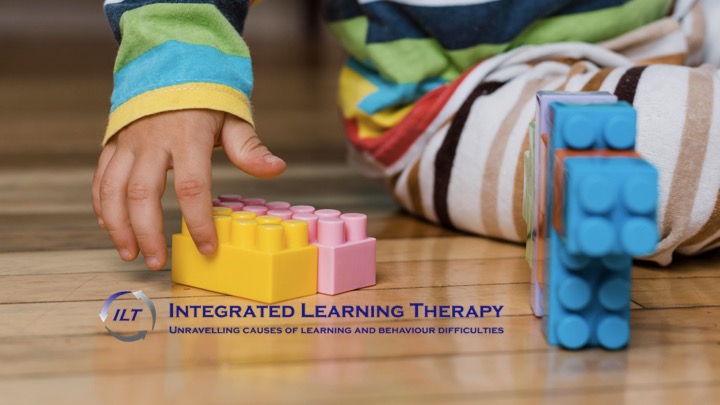
The key is providing early exposure to spatial experiences. That might mean giving children opportunities to build with blocks or LEGO, encouraging them to rotate puzzle pieces to see what fits or letting them play with objects that challenge them to think about size, shape and space.

Talking about those activities is just as important. When parents and educators use spatial words like “under,” “around,” “bigger,” “farther” or “corner,” they’re helping children develop the mental vocabulary to reason and solve problems. Even simple moments become powerful learning opportunities when parents or educators describe spatial relationships out loud.

“When we use spatial words in everyday situations—like talking about how to stack groceries or fit toys into a bin—we’re supporting the brain’s ability to reason and problem-solve,” said Shannon Pruden, senior author and professor of psychology at FIU.

The findings build on Pruden’s earlier work showing that language shapes how children think about space, and confirm that the earlier children engage in spatial play and talk, the greater the impact on their success in STEM education.

“Kids aren’t just absorbing information, they’re thinking critically and strategically much earlier than we used to believe,” Pruden said. “And now we have the tools, and science, to help them thrive.”


More information: Karinna A. Rodriguez et al, Leveraging Eye‐Tracking Technology to Understand How Young Children Solve a Mental Rotation Task, Infant and Child Development (2025). DOI: 10.1002/icd.70018


Provided by Florida International University

Image supplied by Freepik


How much fruit should children eat?

How much fruit should children eat?

We are constantly hearing about the dangers of sugar to both health and brain function and that we should limit the amount our children eat.  Fruit contains high amounts of sugar, so does this mean children should avoid too much fruit?

Nick Fuller, writing for ‘The Conversation’, discusses this.

‘Good sugar’

Sugar itself isn’t inherently harmful, but the type of sugar children eat can be.

Whole fruits contain naturally occurring sugars that are healthy and provide kids with energy. Whole fruits are packed with vitamins and minerals needed for good health. This includes vitamins A, C, E, magnesium, zinc and folic acid. All fruits are suitable—bananas, berries, naartjies, apples and mangoes, to name just a few.

The insoluble fibre in fruit skins also helps children stay regular, and the soluble fibre in fruit flesh helps keep their cholesterol in a healthy range, absorbing “bad” cholesterol to reduce their long-term risk of stroke and heart disease.

So eating fruit is very beneficial for children.

‘Bad sugar’

Added sugars—which add calories but no nutritional value to kids’ diets—are the “bad” sugars and the ones to avoid. They’re found in processed and ultra-processed foods kids crave, such as sweets, cakes, cookies and soft drinks.

Added sugars are often added to seemingly healthy packaged foods, such as muesli bars. They’re also hidden under 60-plus different names in ingredient lists, making them hard to spot.

Weight gain

A diet high in added sugars—found in many processed, ultra-processed foods (for example, sweet and savoury packaged snacks)—can mean children consume excess calories and gain unnecessary weight over the years, which may increase their chance of developing type 2 diabetes as they get older.

On the other hand, research shows that kids who eat more fruit have less abdominal fat.

Research also shows fruit can reduce the risk of type 2 diabetes, with one study finding kids who ate 1.5 servings of fruit daily had a 36% lower risk of developing the disease.

Nutritional deficiencies

A diet high in added sugars can also result in nutritional deficiencies.

Many processed foods offer low-to-no nutrition, which is why dietary guidelines recommend limiting them.

Children filling up on these foods are less likely to eat vegetables, fruits, whole grains and lean meats, producing a diet lacking in fibre and other key nutrients needed for growth and development.

Conclusion: Give kids fruit in abundance

There’s no need to limit how much whole fruit kids eat—it’s nutritious, filling and can protect their health. It’s also going to fill them up and reduce their desire to ask for the processed, packet food that is low in nutrition, and calorie-rich.

But do avoid juiced and dried fruits because juicing leaves the goodness (the fibre) behind in the juicer, and drying strips fruits of their water content, making them easy to overconsume.  Remember that drinking fruit juice may result in consuming more sugar that a cooldrink.  They are bad news.  Giving your child water to drink at school is a far healthier choice.

We do need to reduce kids’ sugar consumption. But this needs to be achieved by reducing their intake of processed and packet foods that contain added sugars, rather than fruit.


Provided by The Conversation

Image provided by Freepik

The power of play in childhood

The power of play in childhood

We are very aware of how children love to play.  Indeed, they need to play.  Not only because it gives them pleasure but also because it is a vitally important part of their learning.

Texas A&M University published an article stressing the power of play. In it, they write that play is how young children make sense of the world.  Through their toys, they use play to explore, experiment, and learn. Research recommends that, in early childhood, children have at least an hour of open-ended play each day.

During this time, they should be encouraged to ask questions, test ideas and engage in creative thinking. Play is not just fun but forms a foundation for their development and learning. Play supports cognitive growth, language and communication skills, social and emotional development, physical coordination, creativity, and overall school readiness.

The writers offer some tips as to how parents can support their child’s development as they play.  Here are three strategies.

Let your child lead

Notice what your child is already doing during play. You don’t need to give instructions or take control — just follow their lead and support their curiosity. Join in by asking open-ended questions that encourage deeper thinking. For example, if your child is building a tower, you might say, “Oh no, it keeps falling! What can you do to make it stronger?” Being nearby and engaged shows your child that their ideas matter and helps them build problem-solving skills through play.

Provide a variety of materials

Instead of offering just one type of toy, try giving your child multiple kinds of play materials at once. For example, provide blocks as well as cars, dolls, and figurines too! Your child might build a house for the dolls or create an entire town with roads, buildings, and characters. Mixing materials encourages creativity, problem-solving, and storytelling, opening the door to endless imaginative possibilities.

Narrate and label

As your child plays, talk about what they’re doing in the moment. This might sound like narrating emotions— “I can see you’re feeling a big emotion right now. You seem excited to start building with the blocks?”—or labelling their actions— “Wow, you are building a tall tower! You were so creative in the way you built your tower with more blocks on the first row and just one block on the last row!” By narrating and labelling during play, you help your child develop language to describe their behaviours, build new vocabulary, reinforce concepts like colours, shapes, and actions, and support their emotional awareness. Most importantly, describing children’s behaviour shows your child that you’re tuned in and encourages them to keep exploring and expressing themselves.


Article provided by Texas A&M University

Image provided by Freepik 


What is the best treatment for attention problems?

What is the best treatment for attention problems?

So many parents hear that their children have concentration problems, can’t focus or show limited attention span.  Along with these descriptors, they see that their child daydreams, fails to complete tasks, loses things, fidgets excessively and so on.

Seeking medical help usually results in a prescription for a stimulant drug, such as Ritalin, Concerta and Strattera.  We do know that behaviour can be changed using certain drugs.  On Ritalin, for example, children are better able to pay attention, stay on task and sit still but the results are temporary; only with repeated dosages and sustained-release tablets will the benefits last all day.  Increasing the dosage over time brings risk of potential side effects even if these don’t show immediately and prolonged use should be discouraged because of uncertainty about long-term effects.   In addition, the drugs don’t address the basic problem.  They may make children easier to manage but don’t make them smarter or happier.  Children don’t learn any better when on medication – in fact, their work may show a lack of thought and originality.  They help the children get through the day in a mechanistic way but don’t make them better prepared for tomorrow.  Unfortunately, the drugs are often used alone, with no on-going programme to help the child in other ways.  In short, they may be the quickest and easiest ‘solution’ for children with attention problems but they aren’t the best. 

The reason is that drugs don’t affect the underlying problems.  Behavioural problems and inattentiveness are symptoms of other problems and the answer isn’t to be found in medication.   Let’s have a look at some case studies:

Little Anna was the smallest child in class and came across as being quiet, withdrawn and easily distracted.  She stares at other children and plays nervously with her crayons and books.  When evaluated for neurodevelopmental delays, she showed that her stress levels were very high.  She had some early developing irregularities that interfered with her brain’s ability to cope with the sights and sounds in the world.   She was simply overwhelmed by what she perceived as ‘threats’ from her environment.  Once these were addressed, her stress levels dropped and she became more responsive. 

John never sits still.  His constant activity often makes him a nuisance in class and at home.  Under investigation, ILT found that due to hitches during his birth and early development, he had mixed dominance, and had failed to develop left-right preference because he hadn’t integrated the two sides of his body.  He also hadn’t developed the foundational systems needed for efficient motor functioning and stable posture.  As these were addressed, he became better able to keep his body still and use it in developmentally healthy movement activities that he could not master before.  This led to his behaviour becoming less annoying, increased ability to make friends and improvements in classroom learning.

Kevin is a daydreamer. He often stares out a window or at the television screen.  He is slow to complete his work.  He is clumsy and often drops things.  He has allergies and is often ill with sinusitis and colds. An ILT evaluation showed that his body didn’t work automatically.  He was using his mind to run his body so the brain’s higher levels, supposed to be used in learning and daily coping, were not available for cognitive functioning.  It would have been so easy for Kevin to slip through the cracks without achieving his potential.  A programme to help underdeveloped brain areas brought about noticeable improvements in his schoolwork and physical coordination.

 Little Sam was asked to leave his nursery school because his ‘violent’ behaviour and tantrums became too much to manage.   A full neurodevelopmental evaluation by ILT showed no irregularities in development or sensory-motor system functioning.  What was suspected was a sensitivity to food colourants and preservatives.  On a trial basis following this suspicion, Sam’s family excluded any foods containing these additives and Sam almost immediately became calmer, eventually returning to his school as a happy, friendly little boy.

So drugs aren’t the answer to behavioural problems or inattentiveness.  Instead, these children need a comprehensive evaluation followed by an individualized programme that corrects identified areas of irregular functioning.

Interestingly, an ILT associate ran a programme with a group of over 50 children, all diagnosed with ADHD[1].  They were given daily certain sensory-motor stimulation and other movement activities designed to recreate the movement patterns that function to develop the brain in the early years.  About half these children were on Ritalin when they started the programme.  All were taken off Ritalin from three to six months later with no need to be put back on Ritalin or other behaviour-modifying medication.  For all children, the results showed the elimination of behaviour problems, better school results and dramatically improved coordination.  Social skills improved significantly as well but most importantly, the children were clearly happier. 

Correcting behavioural and learning problems isn’t easy.  Effective intervention needs a holistic approach that reaches to the problems in the background and provides a supportive, encouraging environment.  For this reason, ILT is practiced in the family – no weekly visits to a therapist but ‘quality time’ spent in movements in which one or both parents can be involved.  The rewards are immeasurable. There is nothing better than watching a child who begins to feel good from the inside out!


Image supplied by Freepik.


[1][1][1] Shirley Randolph, Tree of Learning Centre, Boise, Idaho

Magic movements

Magic movements

From virtually the moment of conception, human genes dictate that we must and will move.  The earliest movements we make are not deliberate but are automatic reflexes.  These ‘primitive’ reflex movements are truly magic because they help develop the brain.

Each time you feel the baby moving inside your uterus, you can celebrate, knowing that those movements are laying down the patterns of neural pathways that serve to connect the different brain areas.  These are the pathways that are vital for learning, behaving appropriately, forming healthy relationships with the people in our lives and enjoying emotional well-being.

They also help develop ability to control the body, muscle tone, good integration of information coming in from the different senses and survive the early months of life.

At birth, our brains are far from completely developed so we depend on primitive reflexes to help us enter the world and then keep us alive.  For example, the Moro reflex is a reaction to being startled. This reflex produces cortisol and adrenaline to help activate the birth process. Then the Asymmetrical Tonic Neck Reflex (ATNR) comes into play, helping the foetus twist down the birth canal during a normal birth.  After we are delivered, the Moro reflex triggers our first breath and permits us to straighten out after months spent in the foetal position in the uterus.

After birth, the sucking reflex allows the mouth to take in nourishment and swallow, while many others are present to help in other ways.  Slowly, these early reflexes are integrated as new ones take their place.  Each reflex appears in a crucial time, does its important job and is then replaced in order for higher development to happen. Ultimately, primitive reflexes are replaced by so-called postural reflexes which allow us to crawl and then finally to walk.

 Problems can be experienced later on if these primitive reflexes are not absorbed or integrated.  Retained reflexes can cause emotional problems, timidity and fearfulness, attention problems and learning difficulties, depression, sensory disorders, lack of confidence, tantrums, bedwetting, fidgeting, thumb sucking and many of the challenges often seen in children.  Unfortunately, children with learning, behavioural and emotional issues often fail to be helped. This is because the symptoms they show are treated, rather than being helped to overcome the underlying causes of their problems.  

There are many reasons for reflexes to remain present and not be integrated.  Included in these are the diet and general health and emotional well-being of the mother during pregnancy. Traumatic birth events including Caesarean birth and the use of instruments can interfere with amongst others, the Moro reflex. This has the domino effect of interfering with the integration of all the reflexes that should follow, setting up glitches in brain development that can persist for years.

When several unintegrated reflexes persist, normal tasks that are taken for granted by most of us become difficult if not impossible.  When children experience sensory integration disorders, vision and listening challenges, extreme shyness and lack of confidence, ADHD, learning challenges and developmental delays, it is time to look for help.  Reading and writing difficulties, language and speech delays, disorganisation, fidgeting and lack of focus all may be signposts to the need for reflex integration.

 The good news is that it is not difficult to integrate reflexes by helping the child with a movement programme.  Certain movements replicate the earlier movements that somehow failed to achieve reflex development or integration, so by showing a child different movements, we give the brain a second chance to reorganise those all-important networks needed for efficient functioning.

 Movement is magic!  Even more magical are the improvements seen in children when they are given the chance to overcome early setbacks in their development.

If you suspect that a child may have unwarranted challenges in coping with home and school demands, you should seriously consider a neurodevelopmental assessment.

Image supplied by Freepik.