
Oct 26, 2022 | Testimonials

Learners who struggle at school seem to be sensitive to the level of noise in their classroom. They are more likely to become annoyed and easily distracted by noise.
This emerged from a study that was published this week in the International Journal of Environmental Research and Public Health measured the impact of noise on over 350 children aged between 7-11 years old.
Noise pollution in our environment is a recognised problem but studies to date have focused on its effects on adults. Until now, little is known of its effect on children or why some children are more sensitive to noise than others.
This new study used a detailed questionnaire to collect children’s reactions to classroom noise. Pupils were given fourteen statements related to noise for example—”when you do an activity alone in the classroom, if noise catches your attention you lose track of your thoughts”. The children were then asked to indicate how often this happened to them, by responding using a 4-point response scale: (1) almost never, (2) rarely, (3) quite often, (4) very often.
These reactions to classroom noise were then linked to children’s temperament, as reported by the children’s teachers. Teachers were given seventeen statements about each child’s attentional focus, impulsivity, behavioural control and ability to engage in school work, for example—”pays attention”, “says the first thing that comes to mind.” Teachers were asked to indicate how true these statements were considering the child’s behaviour over the past two weeks, using a 5-point response scale ranging from (1) almost always untrue, to (4) almost always true. All these aspects of children’s temperament reflect their effortful control. Effortful control underlies children’s capacity to adapt flexibly to social demands and in particular to regulate their attention and behaviour.
The results showed a positive link between those children who were identified by teachers as struggling with effortful control and those children who admit negative attitudes towards noise—in particular more difficulties hearing someone talk, more distraction and more annoyance from noise. Because of being vulnerable to distractions in the classroom, the children might be at risk of developing barriers to learning, such as having difficulties engaging with their work, staying still and maintaining focus.
Dr. Jessica Massonnié, School of Education and Sociology, says that their “findings are important because they question the assumption that children who are perceived as difficult to engage in schoolwork ‘do not care’ about distractions’—they do particularly care. These children report being more annoyed and easily distracted by noise. The danger is that these children who are already being labelled as less focused will face a downward spiral if noise levels in classrooms are not controlled.”
“Interventions aimed at reducing classroom noise and improving effortful control might be particularly beneficial for the most noise sensitive children.”
Oct 19, 2022 | Testimonials
New research by Emma Sciberras, Anna Jackson, Glenn Melvin and Louise Brown looked at children with symptoms of attention-deficit/hyperactivity disorder (ADHD) during lockdowns to understand what home learning was like for them. They reported on this in The Conversation.
100 Australian parents of children with ADHD took part in the survey. They were asked about the benefits and challenges of home schooling and what strategies they used.
While this provided insights into pandemic schooling, there are lessons here for learning beyond lockdowns. Many parents are considering home schooling but the findings of this research can be used to help with homework and teachers may apply them in their classrooms as well.
Symptoms can include difficulty maintaining concentration, controlling impulses (including being able to pause and think), planning and organizing tasks, and managing time and belongings.
Children with ADHD experience greater school and learning difficulties, compared to their peers without ADHD.
Medication can help with reducing inattention and hyperactivity/impulsivity difficulties. But to succeed at school, children with ADHD also require other supports.
Their findings
The symptoms of ADHD include difficulties maintaining concentration, controlling impulses, planning and organising tasks and management of time and belongings. These caused challenges for parents during lockdown.
Of those surveyed, 25% reported difficulty keeping children on task during home schooling. Similar numbers also reported children lacking motivation (22%) and difficulty with the format, structure, and delivery of online learning (19%). If a child had trouble paying attention and anxiety symptoms, these were most likely to make home schooling difficult.
But there were also benefits.
Of those surveyed, 20% of parents reported their child had lower anxiety and stress. Similar numbers also reported they got a better understanding of their child’s learning style and needs (20%) and greater flexibility around how and when their child did school work (19%).
These benefits may be due to children receiving more one-on-one support and more ability to personalize learning for their child.
What strategies helped?
According to the study, the most common helpful strategies used during home schooling for Australian children with ADHD were:
- having routines/organization and time management, including waking up at a set time each day and then following a schedule
- parents being actively involved in their child’s work—keeping track of what work needed to be done and what work had been done
- having a suitable space for children to work, that was quiet and free from distractions.
Tips for parents of children with ADHD
The researchers’ suggestions can be used during any future home schooling or for parents helping their children with homework. They can also be easily adapted by classroom teachers.
The key thing to remember is children with ADHD are not intentionally trying to be naughty, impulsive or distracted. For that reason, discipline will not be effective but the following strategies may help:
- focus on your child’s strengths and positive attributes—this is essential for them to build and maintain self-esteem
- give plenty of praise and encouragement
- ask your child about their struggles and then listen to their responses, acknowledge their feelings and don’t judge or just leap to give advice. You could say, “I can see that you’re really upset. Do you feel like talking about it?” Recent research shows that childrenwith ADHD want to have positive social connections.
- provide gentle redirection if your child gets distracted—you could say, “Wow! What a great job you’ve done so far. Keep going!” instead of “Back to work!”
- limit distractions—turn off TVs, silence phones and have siblings work or play elsewhere
- work with your child from the start of an activity to ensure they understand it and to help them plan the next steps
- give your child one to two instructions at a time
- provide time management assistance—this could include a visual schedule of the steps/tasks required
- enable your child to expend energy whilst listening—this could include fidgets, doodling or bouncing on a Pilates ball—to assist with their concentration
- ensure your child takes regular learning breaks. The frequency of these will depend on your child, it could be helpful to start with more frequent breaks, then adjust as needed.
Oct 5, 2022 | Testimonials
It is so common to hear of children who complain of muscle or joint pains and most of us, including medical professionals, tend to label these as ‘growing pains’. The term first emerged in 1823 in a book called ‘Maladies de la Croissance’ (‘diseases of growth’).
However researchers have found there is no consistent medical definition of the condition behind a diagnosis. This means that we don’t really know the cause of these pains.
Growing pains are considered to be one of the most common causes of recurring musculoskeletal pain in children and adolescents. Some studies suggest up to a third of children experience the condition at some point in their life.
A broad review of medical literature by University of Sydney researchers found there is no agreement among researchers and clinicians on what growing pains really are, what they mean, how they are defined, and how they should be diagnosed. According to these researchers, growing pains may be a medical misnomer. Surprisingly, more than 93 percent of studies did not refer to growth when defining the condition and more than 80 percent of studies made no mention of age in their definition.
The findings have prompted the researchers to recommend the term growing pains not be used by clinicians and other researchers as a stand-alone diagnosis, until a clear definition backed by evidence has been established.
Dr Mary O’Keeffe, from the Institute for Musculoskeletal Health at the University of Sydney writes that “There is a real opportunity to understand this condition—given how widespread the use of the term is, or whether there is even a need to use this term.”
The study is published in Pediatrics.
Sep 28, 2022 | Testimonials
A child’s reaction on the marshmallow test is widely believed to predict their success later in life.
First conducted in the early 1970s by psychologist Walter Mischel, the marshmallow test worked like this: A preschooler was placed in a room with a marshmallow, told they could eat the marshmallow now or wait and get two later, then left alone while the clock ticked and a video camera rolled.
While research is mixed, many studies found that preschoolers who waited longer did better on academic test scores, were less likely to exhibit problem behaviours and had a healthier body mass index and better relationships later in life. Some studies also found that these same study subjects were less likely to end up in jail and made more money.
Five decades on, a fresh approach shows that there is a missing part of the marshmellow story: A new, multicultural approach to the test shows that what children are willing to wait for depends largely on their cultural upbringing.
Lisa Marshall, of the University of Colorado at Boulder, reports on the CU Boulder-led study, published in the journal Psychological Science. The results showed that children in Kyoto, Japan, waited three times longer for food than for gifts, whereas children in Boulder, Colorado, waited nearly four times longer for gifts than for food.
“We found that the ability to delay gratification, which predicts many important life outcomes, is not just about variations in genes or brain development but also about habits supported by culture,” said senior author Yuko Munakata, a research affiliate with the Department of Psychology and Neuroscience at CU Boulder.
The findings provide good news to parents, showing that fostering simple, culturally appropriate habits in young children may influence their development in ways that make it easier for them to delay gratification later. Earlier research that suggested that some children lack self-control is refuted; instead, such children may just have different cultural values attached to waiting.
Munakata, who has Japanese heritage but grew up in the U.S., conceived of the idea of the new study while on sabbatical in Kyoto. On the first day of school, as her two young children tore into their lunchboxes, their peers quickly set them straight, telling them that in Japan no one ate until everyone sat down.
In contrast, while her children were used to waiting to open their gifts on birthdays and Christmas, their Japanese peers tended to open them the moment they got them, whether the gift-giver was present or not.
How much does culture influence what we’ll wait for?
To find out, she teamed up with Professor Satoru Saito at the Graduate School of Education in Japan and Kaichi Yanaoka, then a graduate student at University of Tokyo.
They recruited 144 children from Boulder and Kyoto, randomly assigning each to a test involving either a marshmallow or a wrapped present. Researchers and parents looked on through a video feed.
“One counted the dots on the ceiling. Another drew his name on the desk. Another paced around the room,” said co-author Grace Dostart, a professional research assistant with the Renée Crown Wellness Institute, who helped run the Boulder study.
“It was fascinating to see the self-soothing techniques these kids engaged in.”
The power of politeness
The children in Japan were overwhelmingly better at waiting for the marshmallow, with a median wait time of 15 minutes.
“If we had just looked at their behaviour with the sweets, it would have looked like Japanese kids have better self-control,” said Munakata. “But that was not the end of the story.”
In Japan, kids waited less than five minutes to open the present.
The reverse was true in the U.S., with kids waiting almost 15 minutes to open the present vs. less than four to gobble the marshmallow.
Notably, kids who had a habit of waiting for meals at home and elsewhere waited longer to eat the marshmallow. And, across cultures, children who were more attuned to social conventions (as measured by surveys of children) waited longer.
“This suggests that the way you grow up, the social conventions you are raised around and how much you pay attention to them, are all important,” said Dostart.
Munakata said the study does not debunk the marshmallow test’s central finding: That the ability to resist here-and-now rewards is linked to success in long-term goals. And she acknowledges that genetics, neurocognitive factors and social factors play some role in how much willpower a child exhibits. (Her own 2018 study found that when other preschoolers in their “in-group” opt to wait for the second marshmallow, they tend to also).
But there are things parents and caregivers can do to reap the benefits of better self-control.
“Cultivating habits of waiting for others could be doing much more than supporting politeness,” said Munakata, noting that such habits may change brain systems in ways that make delaying gratification more automatic. “It could make it easier for kids to succeed in future life situations without having to work so hard.”
Sep 14, 2022 | Testimonials
As in many other countries around the world, South African children are bombarded by bad news – often concerning violent behaviours. In spite of parents trying to shield them from media coverage, it is virtually impossible to hide the fact that the larger world is a dangerous place. The information they are getting is very scary indeed.
Parents and caregivers are faced with the dilemma of wondering how to speak to their children about the unspeakable. How can adults help children feel safe when daily tragedies are broadcasted?
Nicole Martins and Erica Scharrer are experts who specialize in children and media. They have extensively studied children’s views of and responses to violence in the media. Their research findings and those of other scholars offer insights into how news can contribute to children’s fears and on how to help children cope. The following is taken from an article in
The Conversation.
Surrounded by news and information
News channels on TV and radio make it likely that that children will come across disturbing news content. For some youngsters, this exposure is deliberate. Teenagers report that they find it important to follow current events. And more than half of this age group get their news from social media.
Children under 12 show little interest in the news, yet many still encounter it. Young children’s news exposure is almost always accidental, either through background television viewing or through family discussions of current events.
No matter how much parents or caregivers try to shield children, then, they are likely to come upon the news.
The news as a catalyst for fear
Several studies have examined children’s fear responses to news. Six months after the 2013 Boston Marathon bombing, Boston-area parents reported that children who viewed more news coverage on the day of the attack were more likely to display symptoms of post-traumatic stress disorder, have behaviour problems and show hyperactivity and/or inattention than children who watched less news.
More recently, an international survey of over 4,000 9-to-13-year-olds from 42 countries found that over half of the children were scared by news stories about the COVID-19 pandemic.
How to talk with kids about tragedies and traumatic events.
Fear and anxiety can also be spurred by exposure to news events that are more commonplace. News stories that children most frequently mentioned as being scary involved natural disasters, kidnappings and burglaries. The mass shootings in the US have led to children believing that their school and society at large were dangerous.
Whether catastrophic or common, fear reactions endure. A survey of college students found that 50% of them could remember a specific news story that they had seen during childhood that frightened, worried or upset them. The effects included feeling scared and being unable to sleep. And 7% of participants said they were still frightened of that event at their present college age.
Age of the child matters
Clearly, media can frighten children and adolescents. But decades of research show that fright-inducing content does not affect all children the same way. Young children demonstrate what researchers call “perceptual dependence,” which means that they react to stimuli in terms of what those stimuli look, sound or feel like.
This often comes as a surprise to parents, but it helps explain why preschoolers may cry when they see movie characters like the Grinch or E.T. Preschool children are more likely to be frightened by something that looks scary but is actually harmless than by something that looks attractive but is truly harmful.
As children mature, they develop the capacity to be frightened by abstract threats. Studies of children’s reactions to news coverage of wars show that although children of all ages are affected, younger kids respond mainly to the visual aspects of coverage such as homes torn apart, whereas older children are more responsive to abstract aspects such as fears that the conflict will spread.
How to help children cope
Just as age affects how children absorb the news, age also influences which strategies are most effective in helping children cope. Noncognitive strategies typically involve avoidance or distraction. Closing one’s eyes, holding on to an attachment object, leaving the room or avoiding news altogether are examples. These strategies work best with younger children.
Cognitive strategies require the child to think about whatever is frightening them in a different way, with an adult often providing a verbal explanation to help. These strategies work best with older children. When dealing with depictions of fantasy, for example, a cognitive strategy that is quite effective is reminding children that what they see “is not real.”
Unfortunately, daily killings and violent events are real. In these cases, the adult can emphasize that the news event is over, that it was far away or that such events are rare. Providing a reassuring message—that the child is safe and loved – also helps.
Mental health experts say parents need to initiate age-appropriate conversations with their children about mass shootings.
Recommendations for the youngest kids
For kids under 7, it is critical to limit exposure to the news. Watching a tragedy on the news can include graphic images and sounds. Very young children will not understand that what they see are replays of the same event and not another tragedy happening again.
Reassure the child. Kids at this age are most worried about their personal safety. It’s important to make them feel safe, even when the adults themselves are worried, as studies show that fear is contagious.
Distraction is also helpful. Although it is important to listen and not downplay concerns, doing something fun together that takes a child’s mind off what is happening can go a long way.
How to help kids in the 8–12 range
For childrenbetween the ages of 8 and 12, it is still important to limit exposure. Admittedly this is more challenging as children age. But making a concerted effort to turn off the news is helpful, especially if the child is sensitive.
Talk about news. If children go online, try to go with them. Consider setting URLs to open to non-news portals.
Be available for conversation. Ask children about what they know. Correct any misconceptions with facts. Listen carefully and ask what questions they have, and then respond honestly with a focus on the basics. Reassure children that they’re safe and that it is OK to feel upset.
Do something to help. Consider ways to help survivors and their loved ones.
Dialing in with teens’ needs
When it comes to teens, it is critically important to check in. In all likelihood, teens learn of news events independent of their parents. But parents and caregivers should offer to talk with them to get a sense of what they know about the situation. This also gives the adult an opportunity to listen to underlying fears and offer insights. Again, try to address concerns without dismissing or minimizing them.
Help teens develop news literacy. If parents or caregivers disagree with how a news event is portrayed in the media, they should discuss this with their child. Emphasizing that there can be misinformation, repetition or exaggeration might help teens put tragic events into a wider perspective.
Sep 7, 2022 | Testimonials
Being able to persist in the face of challenges is very important to learning and school success. However, we know little about how parents and educators can help foster the development of persistent behaviour in children before they begin formal schooling. A new study in the U.S. looked at the interactions of preschool-age children with adults to determine how the adults affected the children’s persistence. It found that the efforts adults put into their actions, their reactions to successes and failures and words used affected children’s persistent behaviour to differing degrees.
The study was conducted by researchers at the University of Pennsylvania and the Massachusetts Institute of Technology (MIT). It appears in Child Development, a journal of the Society for Research in Child Development.
“Our work shows that young children pay attention to the successes and failures of the adults around them and, reasonably, don’t persist long at tasks that adults themselves fail to achieve,” notes Julia A. Leonard, MindCore postdoctoral fellow at the University of Pennsylvania, who led the study. “However, we found that when adults could complete a task successfully, speaking about the value of the effort and letting children see the hard work that went into achieving the goal, it encouraged persistence in children who were watching.”
Researchers examined how the persistence of 520 children ages 4 and 5 years was affected by their observations of adults’ actions (whether they put a lot of or a little effort into an action) and the outcomes of those actions (whether the adults succeeded or failed in their efforts). The children were from a range of socioeconomic and ethnic backgrounds.
The study also looked at how persistence was affected by adults’ words: whether they set expectations for the children’s attempts at a task that was designed to be impossible to complete. For example, adults told the children: “This will be hard,” gave pep talks by saying something like “You can do this,” or offered value statements by saying, for example, “Trying hard is important.” There was also a condition in which adults did not say anything about children’s expectations. Persistence was measured by how hard the children chose to work at the same task attempted by the adults, which was difficult and new to the children.
Children heard adults’ comments without seeing an adult demonstrate the tasks or after seeing an adult demonstrate either high or low effort at the task, then succeed or fail.
The study found:
- Children tried harder after they saw adults succeed than after they saw them fail at a task.
- Adults’ efforts affected children’s persistence, but only when the adults succeeded at their task.
- Children’s persistence was highest when adults exerted effort at their task, succeeded, and talked about the value of making that effort.
According to the authors, these findings show that young children are attentively watching the adults around them and actively learning from their words, efforts, and outcomes how hard they themselves should try at tasks. The study suggests that to encourage children’s persistence, adults should show children how hard work leads to success by demonstrating this in their own actions and by speaking about the value of effort.
“Our study suggests that children are rational learners—they pay attention first and foremost to whether adults succeed at their goals,” says Laura Schulz, professor of cognitive science at MIT, who co-authored the study. “But when adults succeed, children are also watching how hard adults try and what adults say about the value of effort.”






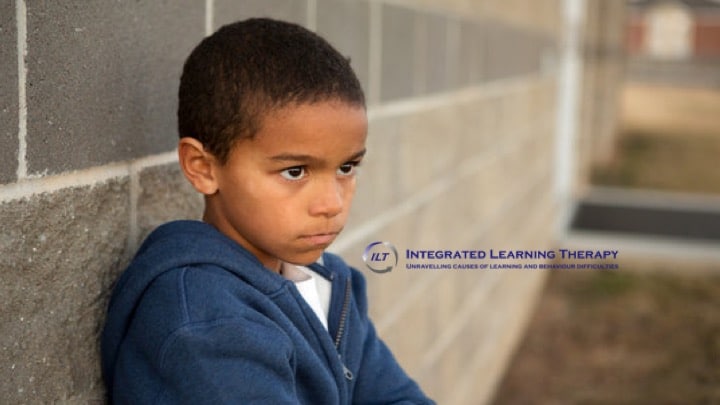
 As in many other countries around the world, South African children are bombarded by bad news – often concerning violent behaviours. In spite of parents trying to shield them from media coverage, it is virtually impossible to hide the fact that the larger world is a dangerous place. The information they are getting is very scary indeed.
Parents and caregivers are faced with the dilemma of wondering how to speak to their children about the unspeakable. How can adults help children feel safe when daily tragedies are broadcasted?
Nicole Martins and Erica Scharrer are experts who specialize in children and media. They have extensively studied children’s views of and responses to violence in the media. Their research findings and those of other scholars offer insights into how news can contribute to children’s fears and on how to help children cope. The following is taken from an article in The Conversation.
Surrounded by news and information
News channels on TV and radio make it likely that that children will come across disturbing news content. For some youngsters, this exposure is deliberate. Teenagers report that they find it important to follow current events. And more than half of this age group get their news from social media.
Children under 12 show little interest in the news, yet many still encounter it. Young children’s news exposure is almost always accidental, either through background television viewing or through family discussions of current events.
No matter how much parents or caregivers try to shield children, then, they are likely to come upon the news.
The news as a catalyst for fear
Several studies have examined children’s fear responses to news. Six months after the 2013 Boston Marathon bombing, Boston-area parents reported that children who viewed more news coverage on the day of the attack were more likely to display symptoms of post-traumatic stress disorder, have behaviour problems and show hyperactivity and/or inattention than children who watched less news.
More recently, an international survey of over 4,000 9-to-13-year-olds from 42 countries found that over half of the children were scared by news stories about the COVID-19 pandemic.
How to talk with kids about tragedies and traumatic events.
Fear and anxiety can also be spurred by exposure to news events that are more commonplace. News stories that children most frequently mentioned as being scary involved natural disasters, kidnappings and burglaries. The mass shootings in the US have led to children believing that their school and society at large were dangerous.
Whether catastrophic or common, fear reactions endure. A survey of college students found that 50% of them could remember a specific news story that they had seen during childhood that frightened, worried or upset them. The effects included feeling scared and being unable to sleep. And 7% of participants said they were still frightened of that event at their present college age.
Age of the child matters
Clearly, media can frighten children and adolescents. But decades of research show that fright-inducing content does not affect all children the same way. Young children demonstrate what researchers call “perceptual dependence,” which means that they react to stimuli in terms of what those stimuli look, sound or feel like.
This often comes as a surprise to parents, but it helps explain why preschoolers may cry when they see movie characters like the Grinch or E.T. Preschool children are more likely to be frightened by something that looks scary but is actually harmless than by something that looks attractive but is truly harmful.
As children mature, they develop the capacity to be frightened by abstract threats. Studies of children’s reactions to news coverage of wars show that although children of all ages are affected, younger kids respond mainly to the visual aspects of coverage such as homes torn apart, whereas older children are more responsive to abstract aspects such as fears that the conflict will spread.
How to help children cope
Just as age affects how children absorb the news, age also influences which strategies are most effective in helping children cope. Noncognitive strategies typically involve avoidance or distraction. Closing one’s eyes, holding on to an attachment object, leaving the room or avoiding news altogether are examples. These strategies work best with younger children.
Cognitive strategies require the child to think about whatever is frightening them in a different way, with an adult often providing a verbal explanation to help. These strategies work best with older children. When dealing with depictions of fantasy, for example, a cognitive strategy that is quite effective is reminding children that what they see “is not real.”
Unfortunately, daily killings and violent events are real. In these cases, the adult can emphasize that the news event is over, that it was far away or that such events are rare. Providing a reassuring message—that the child is safe and loved – also helps.
Mental health experts say parents need to initiate age-appropriate conversations with their children about mass shootings.
Recommendations for the youngest kids
For kids under 7, it is critical to limit exposure to the news. Watching a tragedy on the news can include graphic images and sounds. Very young children will not understand that what they see are replays of the same event and not another tragedy happening again.
Reassure the child. Kids at this age are most worried about their personal safety. It’s important to make them feel safe, even when the adults themselves are worried, as studies show that fear is contagious.
Distraction is also helpful. Although it is important to listen and not downplay concerns, doing something fun together that takes a child’s mind off what is happening can go a long way.
How to help kids in the 8–12 range
For childrenbetween the ages of 8 and 12, it is still important to limit exposure. Admittedly this is more challenging as children age. But making a concerted effort to turn off the news is helpful, especially if the child is sensitive.
Talk about news. If children go online, try to go with them. Consider setting URLs to open to non-news portals.
Be available for conversation. Ask children about what they know. Correct any misconceptions with facts. Listen carefully and ask what questions they have, and then respond honestly with a focus on the basics. Reassure children that they’re safe and that it is OK to feel upset.
Do something to help. Consider ways to help survivors and their loved ones.
Dialing in with teens’ needs
When it comes to teens, it is critically important to check in. In all likelihood, teens learn of news events independent of their parents. But parents and caregivers should offer to talk with them to get a sense of what they know about the situation. This also gives the adult an opportunity to listen to underlying fears and offer insights. Again, try to address concerns without dismissing or minimizing them.
Help teens develop news literacy. If parents or caregivers disagree with how a news event is portrayed in the media, they should discuss this with their child. Emphasizing that there can be misinformation, repetition or exaggeration might help teens put tragic events into a wider perspective.
As in many other countries around the world, South African children are bombarded by bad news – often concerning violent behaviours. In spite of parents trying to shield them from media coverage, it is virtually impossible to hide the fact that the larger world is a dangerous place. The information they are getting is very scary indeed.
Parents and caregivers are faced with the dilemma of wondering how to speak to their children about the unspeakable. How can adults help children feel safe when daily tragedies are broadcasted?
Nicole Martins and Erica Scharrer are experts who specialize in children and media. They have extensively studied children’s views of and responses to violence in the media. Their research findings and those of other scholars offer insights into how news can contribute to children’s fears and on how to help children cope. The following is taken from an article in The Conversation.
Surrounded by news and information
News channels on TV and radio make it likely that that children will come across disturbing news content. For some youngsters, this exposure is deliberate. Teenagers report that they find it important to follow current events. And more than half of this age group get their news from social media.
Children under 12 show little interest in the news, yet many still encounter it. Young children’s news exposure is almost always accidental, either through background television viewing or through family discussions of current events.
No matter how much parents or caregivers try to shield children, then, they are likely to come upon the news.
The news as a catalyst for fear
Several studies have examined children’s fear responses to news. Six months after the 2013 Boston Marathon bombing, Boston-area parents reported that children who viewed more news coverage on the day of the attack were more likely to display symptoms of post-traumatic stress disorder, have behaviour problems and show hyperactivity and/or inattention than children who watched less news.
More recently, an international survey of over 4,000 9-to-13-year-olds from 42 countries found that over half of the children were scared by news stories about the COVID-19 pandemic.
How to talk with kids about tragedies and traumatic events.
Fear and anxiety can also be spurred by exposure to news events that are more commonplace. News stories that children most frequently mentioned as being scary involved natural disasters, kidnappings and burglaries. The mass shootings in the US have led to children believing that their school and society at large were dangerous.
Whether catastrophic or common, fear reactions endure. A survey of college students found that 50% of them could remember a specific news story that they had seen during childhood that frightened, worried or upset them. The effects included feeling scared and being unable to sleep. And 7% of participants said they were still frightened of that event at their present college age.
Age of the child matters
Clearly, media can frighten children and adolescents. But decades of research show that fright-inducing content does not affect all children the same way. Young children demonstrate what researchers call “perceptual dependence,” which means that they react to stimuli in terms of what those stimuli look, sound or feel like.
This often comes as a surprise to parents, but it helps explain why preschoolers may cry when they see movie characters like the Grinch or E.T. Preschool children are more likely to be frightened by something that looks scary but is actually harmless than by something that looks attractive but is truly harmful.
As children mature, they develop the capacity to be frightened by abstract threats. Studies of children’s reactions to news coverage of wars show that although children of all ages are affected, younger kids respond mainly to the visual aspects of coverage such as homes torn apart, whereas older children are more responsive to abstract aspects such as fears that the conflict will spread.
How to help children cope
Just as age affects how children absorb the news, age also influences which strategies are most effective in helping children cope. Noncognitive strategies typically involve avoidance or distraction. Closing one’s eyes, holding on to an attachment object, leaving the room or avoiding news altogether are examples. These strategies work best with younger children.
Cognitive strategies require the child to think about whatever is frightening them in a different way, with an adult often providing a verbal explanation to help. These strategies work best with older children. When dealing with depictions of fantasy, for example, a cognitive strategy that is quite effective is reminding children that what they see “is not real.”
Unfortunately, daily killings and violent events are real. In these cases, the adult can emphasize that the news event is over, that it was far away or that such events are rare. Providing a reassuring message—that the child is safe and loved – also helps.
Mental health experts say parents need to initiate age-appropriate conversations with their children about mass shootings.
Recommendations for the youngest kids
For kids under 7, it is critical to limit exposure to the news. Watching a tragedy on the news can include graphic images and sounds. Very young children will not understand that what they see are replays of the same event and not another tragedy happening again.
Reassure the child. Kids at this age are most worried about their personal safety. It’s important to make them feel safe, even when the adults themselves are worried, as studies show that fear is contagious.
Distraction is also helpful. Although it is important to listen and not downplay concerns, doing something fun together that takes a child’s mind off what is happening can go a long way.
How to help kids in the 8–12 range
For childrenbetween the ages of 8 and 12, it is still important to limit exposure. Admittedly this is more challenging as children age. But making a concerted effort to turn off the news is helpful, especially if the child is sensitive.
Talk about news. If children go online, try to go with them. Consider setting URLs to open to non-news portals.
Be available for conversation. Ask children about what they know. Correct any misconceptions with facts. Listen carefully and ask what questions they have, and then respond honestly with a focus on the basics. Reassure children that they’re safe and that it is OK to feel upset.
Do something to help. Consider ways to help survivors and their loved ones.
Dialing in with teens’ needs
When it comes to teens, it is critically important to check in. In all likelihood, teens learn of news events independent of their parents. But parents and caregivers should offer to talk with them to get a sense of what they know about the situation. This also gives the adult an opportunity to listen to underlying fears and offer insights. Again, try to address concerns without dismissing or minimizing them.
Help teens develop news literacy. If parents or caregivers disagree with how a news event is portrayed in the media, they should discuss this with their child. Emphasizing that there can be misinformation, repetition or exaggeration might help teens put tragic events into a wider perspective.

