
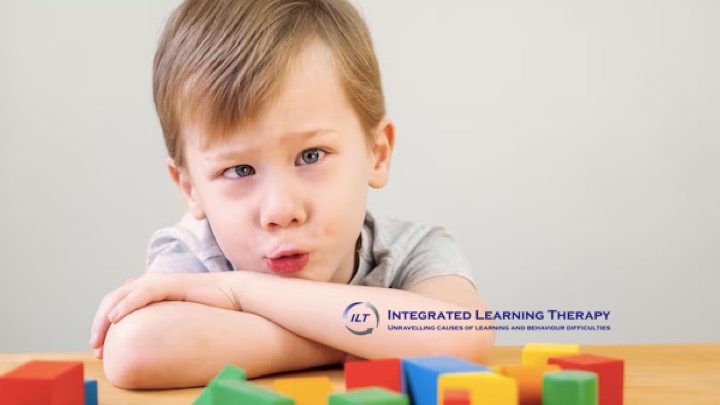
How can you help a child learn to self-regulate?

How can you help a child learn to self-regulate?


Recently, I posted an article about self-regulation – which is an important milestone in the lives of children.

Self-regulation is the ability to control our emotional reaction to events and to be able to make and maintain friendships, persevere with tasks and manage the demands of school and life in general.  It starts developing between the ages of three and five.  Before then, we have the terrible two’s, with temper tantrums and clear signs that a child is ruled by strong feelings.  Unless self-regulation develops adequately, in later years the lack shows up in inability to follow the rules of a game, becoming easily upset by setbacks, and even in adulthood, gambling, addiction and other unhealthy lifestyles may be linked to failure to control and regulate emotions.

The importance of being able to manage those feelings is clear.  Natalie Day and her colleagues have been researching how parents can help children learn to regulate.  Writing for The Conversation, here are their findings.

Don’t be too quick to help

Sometimes, a parent’s desire to protect and “help” their child can hamper their development.

Children experience challenges all the time—this may be opening a jar, trying to find a certain toy in their bedroom, or doing up their buttons. As parents, we are often tempted to rush in and fix the problem straight away.

It is, however, important for children’s brain development to experience and cope with challenges. When parents let children face a tricky task, they can learn to think flexibly, create solutions and persist toward the goal. It also teaches them they can handle things themselves.

Persistence when playing a game can translate to persistence when tying their shoelaces, and in time, fewer meltdowns.

What should parents do instead?

This is not to say you should ignore your child if they are very distressed and stuck up a tree, or have fallen and seriously hurt themselves.

But there are many other occasions when you can wait, or help in less obvious ways.

For example, if a child is struggling to find the right puzzle piece, parents should wait for the child to either ask for help or show visible signs of frustration.

If possible, start just by using guiding words to help, rather than taking a hands-on approach. You could try encouragement, questions, hints and suggestions to lead your child to a solution. For example, “have you tried all the pieces yet?”

Or if they are playing with Lego, parents may remind the child of their last success or ask them “what does the diagram show?”, they might give a hint such as “I sometimes need to go back some steps to find where I went wrong,” or maybe more directly, “how about we look through the steps together?”

This type of guidance means the child is still the one solving the problem.

Step up your approach

If the child is still stuck, parents can guide them in more ‘hands-on’ ways.

When struggling with a section of a puzzle, a parent may move some pieces closer to the child to draw their attention to them.

If needed, a more direct approach would be to identify the piece the child is looking for, and hand it to the child so that they can put it in and remain active in completing the task.

The child may not have the piece the right way round, so the parent should revert to using verbal guidance for encouragement or suggest turning the piece to see if it fits.

Children stay in charge

The key thing to remember is the child should be guiding your approach to helping them.

Don’t intervene without them asking you, and don’t offer full support straight away.

You can use encouragement, hints and suggestions, and then hands-on help. Keep offering your child the chance to work elements out for themselves. And know their way of solving the problem might be different from yours.


Provided by The Conversation. Read the original article.


Image supplied by Freepik.

Is it wise to calm children with electronic devices?

Is it wise to calm children with electronic devices?

We have all witnessed this scenario – just when something needs to be done, Junior becomes impossible and quickly calming him down can be achieved by handing over a cell phone or other digital device. It gains some quiet time but is this quick fix a wise one? According to a Michigan Medicine study published in JAMA Pediatrics, it may not be.

Their findings show that this calming strategy might be linked to worse behaviour challenges down the road. Children aged 3-5 years who are often offered devices to calm them down tend to show a lack of ability to regulate their emotions at a later age.  This is especially true of boys.

“Using mobile devices to settle down a young child may seem like a harmless, temporary tool to reduce stress in the household, but there may be long term consequences if it’s a regular go-to soothing strategy,” said lead author Jenny Radesky, M.D., a developmental behavioral pediatrician at University of Michigan Health C.S. Mott Children’s Hospital.

“Particularly in early childhood, devices may displace opportunities for development of independent and alternative methods to self-regulate.”

The study included 422 parents and 422 children ages 3-5 who participated between August 2018 and January 2020, before the COVID-19 pandemic started. Researchers analysed parent and caregiver responses to how often they used devices as a calming tool and associations to symptoms of emotional reactivity or dysregulation over a six-month period.

The study included 422 parents and 422 children aged 3-5 years.  Researchers analysed how often they used phones or tablets as a soothing strategy and the children’s symptoms of emotional reactivity over a six-month period.  Children who are less able to regulate their emotional state show rapid shifts between sadness and excitement or rapid changes of mood and heightened impulsivity. In this study, young boys and children who already experienced hyperactivity, impulsiveness and a strong temperament causing them to react intensely to emotional experiences showed a particularly high association between being given devices to calm themselves and emotional consequences.  In other words, the results showed that using such devices as a way to distract agitated children “may especially be problematic to those who already struggle with emotional coping skills,” said Radesky.

She notes that the preschool-to-kindergarten period is a developmental stage when children may be more likely to exhibit difficult behaviours, such as tantrums, defiance and intense emotions. This may make it even more tempting to use devices as a parenting strategy.

“Caregivers may experience immediate relief from using devices if they quickly and effectively reduce children’s negative and challenging behaviors,” Radesky says. “This feels rewarding to both parents and children and can motivate them both to maintain this cycle.

“The habit of using devices to manage difficult behavior strengthens over time as children’s media demands strengthen as well. The more often devices are used, the less practice children—and their parents—get to use other coping strategies.”

Alternative methods can help develop emotion regulation skills

Radesky acknowledges that there are times when parents may use devices to distract children such as during travel or multitasking.  She believes that occasional use of media to occupy children is harmless and realistic, it is important for it not to become a primary or regular soothing tool.

Here are some of the solutions she recommends as an alternative to using a device:

Sensory techniques: Different sensory inputs calm down different young children.  Some are calmed by swinging, hugging or deep pressure such as big hugs.  Others react positively to music or looking at a book.  Know what kind of movement or sensory activities help your child to feel calmer.

 Name the emotion and what to do about it: When parents label what they think their child is feeling, they both help the child connect language to emotions, and also show the child that they are understood. The more parents can stay calm, they can show kids that emotions have names and can be managed.

Use colour zones: When children are young, they have a hard time thinking about abstract and complicated concepts like emotions. Colour zones (blue for bored, green for calm, yellow for anxious/agitated, red for explosive) are easier for kids to understand and can be made into a visual guide kept on the fridge, and help young children paint a mental picture of how their brain and body is feeling. Parents can use these colour zones in challenging moments (“you are getting wiggly and in the yellow zone—what can you do to get back to green?”)

Offer replacement behaviours: Children can show some pretty negative behaviours when they are upset, and it’s a normal instinct to want it to just stop. But those behaviours are communicating emotions. It offers an opportunity to teach them a safer behaviour to do instead.  For example, “hitting hurts people; you can hit this pillow instead,” or “instead of interrupting, tap my arm and say excuse me Mom.”

Parents can also prevent tech-related tantrums by setting timers, giving kids clear expectations of when and where devices can be used, and use apps or video services that have clear stopping points and don’t just auto-play or let the child keep scrolling.

When children are calm, look for opportunities to teach them emotional coping skills, Radesky says. For example, talk to them about how their favourite stuffed animal might be feeling and how they handle their big emotions and calm down. This type of playful discussion uses child-appropriate language and resonates with them.

“All of these solutions help children understand themselves better, and feel more competent at managing their feelings,” Radesky said. “It takes repetition by a caregiver who also needs to try to stay calm and not overreact to the child’s emotions, but it helps build emotion regulation skills that last a lifetime.

“In contrast, using a distractor like a mobile device doesn’t teach a skill—it just distracts the child away from how they are feeling. Kids who don’t build these skills in early childhood are more likely to struggle when stressed out in school or with peers as they get older.”

More information: “Longitudinal association between use of mobile devices for calming and emotional reactivity and executive functioning in children aged 3 to 5 years,” JAMA Pediatrics (2022). DOI: 10.1001/jamapediatrics.2022.4793

The image is accredited to Freepik