Why some children can’t sit still

Why some children can’t sit still


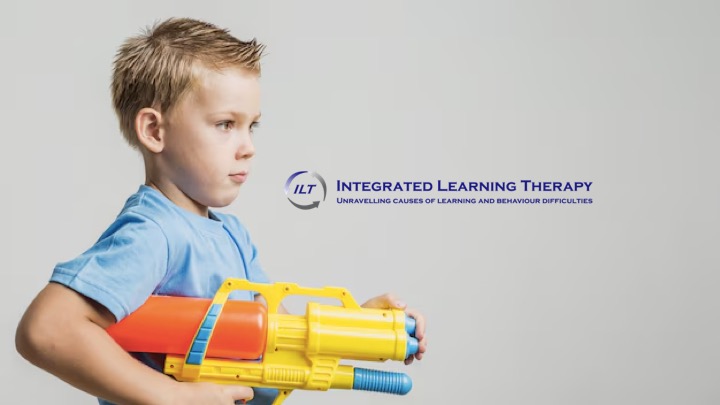
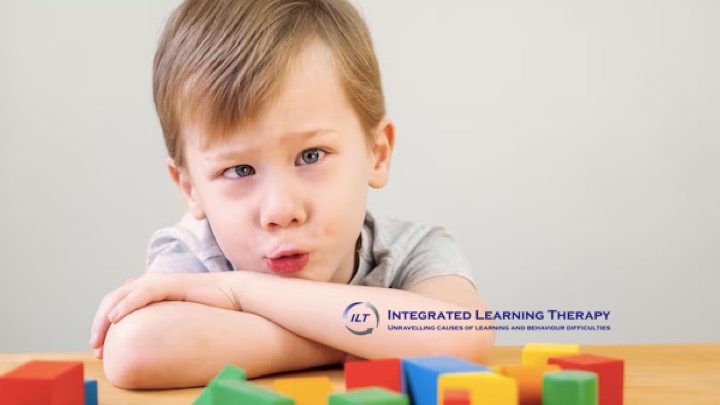
You may notice those children who simply can’t sit still but wriggle and shift in their chairs.  The culprit may be a reflexive movement that is necessary for our development but if not integrated due to some hiccup, can cause later difficulties with posture.

The Symmetrical Tonic Neck Reflex (STNR) is one of the primitive, reflexive movements made by all human babies.  The STNR is an automatic movement that makes the top half of the body work in opposition to the bottom half.  This means that when the top half of the body is straight, the bottom half bends, and vice versa.  It also makes it possible for the right and left sides of the body to work together.  The reflex is activated by a change in the position of the neck, which produces a change in the muscular tension (tonic).

The reflex makes it possible for a baby to crawl and then after a good long period of crawling – about six months – the child should have crawled enough to be in control of his body rather than having the STNR in control.   If something goes wrong along the developmental path, the child may not be able to crawl easily and so find the attempted movement so frustrating that they simply get up and walk early.  This allows the STNR to remain past it’s due date!

Early on, the interference of the STNR may not be noticeable because young children are allowed lots of freedom to sit as they like and move more.  They are seldom required to remain at a desk to complete tasks and listen to the teacher for long periods.

If his body is controlled by the STNR, a child will feel more comfortable if his arms are straight when sitting with knees and hips bent, or sitting with straight legs when the arms are bending in order to write.  If the STNR caused a child’s arms to actually shoot straight out in front of them when their legs are bent, adults would realise a problem.  But the reflex is not so obvious.  We are talking about normal children who are still experiencing the ‘pull’ of the reflex, rather than being totally under its control.  This means that they may be able to sit normally for a while but they cannot sit comfortably and they cannot sit still for long periods of time.

What you might see.

Children start to move in ways that help to relieve the physical tension they feel when required to sit still.  They may reach their arms across the desk to try and maintain straight arms; they may sit on one or both legs under them; they may try to ‘lock’ their bodies into their chairs by wrapping their feet around the chair legs; they may prefer to lie on the floor; they may slouch in their chairs, keeping their arms and legs stretched in front on them; they may prefer to stand at their desks; they may try to write with their head on one of their arms.

And the STNR doesn’t only affect sitting but also impacts on other aspects of learning.  For this reason, it is important to check that a retained STNR is not part or whole of your child’s ‘disruptive’ behaviours and school difficulties.

 Image supplied by Freepik.


Shortsightness in children: What can we do?

Shortsightness in children: What can we do?

I’ve reported before about the concern expressed around the world for the increase in shortsightedness amongst young children.

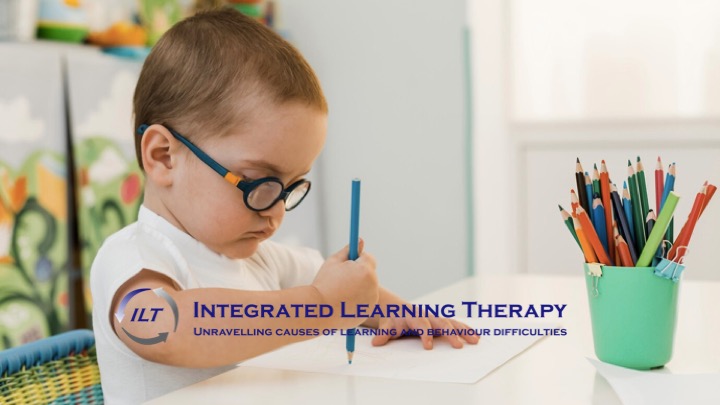
Myopia, the ‘official’ term for shortsightedness, is usually treated with glasses but if left unchecked or if glasses are not given, it can progress to more serious and irreversible eye conditions.  This is why it is so important that children’s vision is regularly tested.

Writing for The Conversation, Flora Hui gives information about myopia and suggests what you can do if you think your child might be shortsighted.

What causes myopia?

Myopia is partly due to genetics. Parents who have myopia—and especially high myopia—are more likely to have children who develop myopia as well. 

But environmental factors can also play a role.  One culprit is the amount of time we spend looking at screens. As screens have shrunk, we tend to hold them closer. This kind of prolonged focusing at short range has long been associated with developing myopia.

Limiting or reducing screen time may help reduce eye strain and slow myopia’s development. However, for many of us—including children—this can be difficult, given what a huge role screens play in our lives today.

Green time over screen time

Higher rates of myopia may also be linked to children spending less time outside, rather than screens themselves. Studies have shown boosting time outdoors by one to two hours per day may reduce the onset of myopia over a two to three year period.

We are still unsure how this works. It may be that the greater intensity of sunlight—compared to indoor light—promotes the release of dopamine. This crucial molecule can slow eye growth and help prevent myopia developing.

But according to current research, once you have myopia, time outdoors may only have a small effect on how it worsens.

Are there methods to slow progression of myopia?

Research is rapidly developing in myopia control. In addition to glasses, optometrists have a range of tools to slow eye growth and with it, the progression of myopia.  Two effective methods mentioned by Flora Hui are:

  • orthokeratology (“ortho-K”)uses hard contact lenses to temporarily reshape the eye to improve vision. They are convenient as they are only worn while sleeping. However, parents need to make sure lenses are cleaned and stored properly to reduce the chance of eye infections
  • atropine eyedropshave been shown to successfully slow myopia progression. Eyedrops can be simple to administer, have minimal side effects and don’t carry the risk of infection associated with contact lenses.

What are the risks with myopia?

Myopia is easily corrected by wearing glasses or contact lenses. But if you have “high myopia” (meaning you are severely shortsighted) you have a higher risk of developing other eye conditions across your lifetime, and these could permanently damage your vision.

These conditions include:

What can parents and teachers do?

It’s important to diagnose and treat myopia early—especially high myopia—to stop it progressing and lower the risk of permanent damage.

Uncorrected myopia can also affect a child’s ability to learn, simply because they can’t see clearly. Signs a child might need to be tested can include squinting to see into the distance, not being able to read things written on the board in the classroom or moving things such as a screen or book closer to the eyes to see.

Regular eye tests with an optometrist are the best way to understand a child’s eye health and eyesight. Each child is different—an optometrist can help you work out tailored methods to track and manage myopia, if it is diagnosed.


Provided by The Conversation 

Image provided by Freepik

How can you help your child acquire ball skills?

How can you help your child acquire ball skills?

Being able to throw and catch balls and other objects is a fundamental movement skill that is considered an important milestone in a child’s early years.  This is because they form the foundation for other, more complicated physical activities.

In recent years, researchers have been commenting on a noticeable decline in children’s throwing and catching skills.  Stuart Evans and Kane Middleton, writing for The Conversation, discuss this and suggest ways for parents to help their children develop these important skills.

Why is it so important to be able to throw and catch?

Not all children will become ‘sporty’ and shine in one or more sporting activities. Yet it is important they develop fundamental movement skills, including throwing and catching, running, skipping and balancing.

These skills are seen as “fundamental” because they are needed to engage in physical activities effectively and confidently. These also form the basis of skills in all other sports. Without these skills, it is difficulty to remain active and healthy throughout life, which is so important to our physical and mental health.

Children need help to learn

By the time a child is about five, they should be able to throw using a coordinated movement of the throwing arm and opposite leg stepping forward. They should be able to catch using their hands only.

A common misconception is that children learn skills such as throwing and catching automatically. But research in Australia and elsewhere shows that an increasing number of children are not developing adequate basic skills, nor playing as much sport as they used to.

How can you help your child’s throwing and catching skills?

Early childhood education includes fundamental movement skills in their programmes. Guidelines note it takes between 240 and 600 minutes of teaching time for a child to become proficient in one fundamental movement skill.

But research suggests parents can also help their kids at home and you can start building these skills from about the age of two. Here are some tips:

Start slowly

When you’re helping your child, start with larger balls or balloons and work on overarm throwing, underarm throwing and two-handed passes. These can include chest passes and bounce passes like you see in netball and basketball.

As your child gets older, you can make the balls smaller and distances greater. And you can introduce challenges, such as “show me a different way of throwing or catching.”

Have formal and informal sessions

Research shows it’s important for children to get both unstructured play and structured practice to learn these skills.

This gives them specific tips and a chance to experiment and develop their skills.

Vary the activities

Repeatedly practicing the same skill under the same conditions can lead to rapid gains in skill development. But it does not teach children how to apply this skill.

Research suggests children should practice skills in a variety of ways.

If a task is unpredictable, it will create a more “game-like” environment so children are challenged to find solutions.

For example, you could have a game that involves throwing to a target. You could have changing targets (instead of just throwing at the same target over and over).

Keep it fun

While you may be “practicing” or “working” on a skill, try and make it enjoyable. Perhaps it forms part of a trip to the park or it involves a favourite toy. Maybe it involves different equipment or a game where the ball is a character.

If you have concerns about how your child‘s fundamental movement skills are developing, talk to their teacher or consult a professional to help.


Provided by The Conversation 

Image provided by Freepik


Beware of noisy toys this festive season

Beware of noisy toys this festive season

We’re rapidly approaching the festive season, when many people delight in treating children to gifts, mainly toys.  But before you make a selection for a young child, consider whether or not the toy makes a noise.

Dennis Thompson reports that the American Academy of Audiology (AAA) is warning parents that noisy playthings can do long-lasting damage to a child’s hearing

The ADD says that tiny ears are particularly susceptible to hearing damage. The inner ear contains delicate hair cells that don’t regrow, resulting in permanent hearing loss if damaged by noise.

What’s more, children like to hold toys up to their ears while playing.

In an AAA news release, they stated that many parents don’t realize the permanent damage a simple toy can inflict on a child’s hearing. “When we fail to protect a child’s hearing, the result can be irreversible hearing loss.

We are born with about 16,000 hair cells within the cochlea, the part of the inner ear involved with hearing. Those cells allow the brain to detect sound.  These need to be protected in order to function well.  In addition, noise can also damage the auditory nerve that carries signals from the ear to the brain.

So before you buy a noise-making toy, download a phone app to test the sound levels emitted by the toy.

American guidelines acknowledge 85 decibels as the level at which noise can cause damage to a person’s hearing, if they’re exposed to the sound for extended periods of time. If 85 decibels or higher is registered when holding your phone near them, like a child would hold the toy near their own ear, the toy may be risking damage to the ear.

It is hardly necessary to remind ourselves of the challenges faced by children with hearing problems. These can set a child back at school as well in social life.  Apart from missing what is being said, they use so much extra effort to hear, they often become distracted and exhausted by the end of the day. Lack of focus and even depression can result from difficulty hearing.  It is also likely that hearing problems may be mistaken for learning disabilities.

With this in mind, it is well worth exercising caution when buying sound-producing toys, including video games.   Whenever possible, make sure the level of sound of particularly games are set at an acceptable, non-harmful level and teach children to keep them at that level.

Also be aware of any signs of hearing difficulties that your child might be showing and have them tested if you are concerned.


Image supplied by Freepik.


How can you help a child learn to self-regulate?

How can you help a child learn to self-regulate?


Recently, I posted an article about self-regulation – which is an important milestone in the lives of children.

Self-regulation is the ability to control our emotional reaction to events and to be able to make and maintain friendships, persevere with tasks and manage the demands of school and life in general.  It starts developing between the ages of three and five.  Before then, we have the terrible two’s, with temper tantrums and clear signs that a child is ruled by strong feelings.  Unless self-regulation develops adequately, in later years the lack shows up in inability to follow the rules of a game, becoming easily upset by setbacks, and even in adulthood, gambling, addiction and other unhealthy lifestyles may be linked to failure to control and regulate emotions.

The importance of being able to manage those feelings is clear.  Natalie Day and her colleagues have been researching how parents can help children learn to regulate.  Writing for The Conversation, here are their findings.

Don’t be too quick to help

Sometimes, a parent’s desire to protect and “help” their child can hamper their development.

Children experience challenges all the time—this may be opening a jar, trying to find a certain toy in their bedroom, or doing up their buttons. As parents, we are often tempted to rush in and fix the problem straight away.

It is, however, important for children’s brain development to experience and cope with challenges. When parents let children face a tricky task, they can learn to think flexibly, create solutions and persist toward the goal. It also teaches them they can handle things themselves.

Persistence when playing a game can translate to persistence when tying their shoelaces, and in time, fewer meltdowns.

What should parents do instead?

This is not to say you should ignore your child if they are very distressed and stuck up a tree, or have fallen and seriously hurt themselves.

But there are many other occasions when you can wait, or help in less obvious ways.

For example, if a child is struggling to find the right puzzle piece, parents should wait for the child to either ask for help or show visible signs of frustration.

If possible, start just by using guiding words to help, rather than taking a hands-on approach. You could try encouragement, questions, hints and suggestions to lead your child to a solution. For example, “have you tried all the pieces yet?”

Or if they are playing with Lego, parents may remind the child of their last success or ask them “what does the diagram show?”, they might give a hint such as “I sometimes need to go back some steps to find where I went wrong,” or maybe more directly, “how about we look through the steps together?”

This type of guidance means the child is still the one solving the problem.

Step up your approach

If the child is still stuck, parents can guide them in more ‘hands-on’ ways.

When struggling with a section of a puzzle, a parent may move some pieces closer to the child to draw their attention to them.

If needed, a more direct approach would be to identify the piece the child is looking for, and hand it to the child so that they can put it in and remain active in completing the task.

The child may not have the piece the right way round, so the parent should revert to using verbal guidance for encouragement or suggest turning the piece to see if it fits.

Children stay in charge

The key thing to remember is the child should be guiding your approach to helping them.

Don’t intervene without them asking you, and don’t offer full support straight away.

You can use encouragement, hints and suggestions, and then hands-on help. Keep offering your child the chance to work elements out for themselves. And know their way of solving the problem might be different from yours.


Provided by The Conversation. Read the original article.


Image supplied by Freepik.

Help your child overcome these five fussy eating problems

Help your child overcome these five fussy eating problems

In the distant past, humans may have developed a reason for being fussy about foods.  They had to avoid strange and bitter tastes to prevent themselves being poisoned. They also knew to seek out types of high-energy, palatable foods and store these for periods of food scarcity.  In the present, it is certainly very common for children from the age of about 3 years to develop aversions to certain foods and become fixated on eating only a few.

Nick Fuller writes that the foods we eat from an early age forms lifelong food preferences so that, and the fact that we need a variety of food for good health, means that we need to encourage our children to eat a balanced diet.  Writing for The Conversation, he outlines some of the most frequent foods avoided by young children and offers ideas of overcoming reluctance to eat them.

  1. Only eating beige or white foods

When it comes to fussy eating, beige and white foods typically reign supreme. This is because these foods are:

  • familiar—they’re the colour of breastmilk and the foods typically used when we introduce solids, such as infant cereal
  • bland or mild-flavored—they don’t overwhelm toddlers who have 30,000-plus tastebuds(versus the 10,000-plus adults have)
  • easy—they’re often soft and easy to chew, making them appealing to toddlers developing chewing skills
  • non-threatening—they’re the opposite of what our hunter-gatherer ancestors have programmed us to avoid: brightly coloured—and toxic—foods found in the wild.

While it can be tempting to give in and serve chicken nuggets at every meal, a diet consisting of only beige and white foods is likely to be highly processed and low in dietary fibre. This can result in constipation and the depletion of healthy gut bacteria.

A beige/white diet can also lack the vitamins and minerals needed for healthy development and growth, including vitamins B and C, and iron.

To add healthier food options, and more colour, to your toddler’s diet:

  • mix things up. Combine less healthy beige and white foods with healthier ones, like blending cannellini beans and cauliflower into mashed potatoes
  • make healthy swaps. Gradually replace the favoured white bread, pasta and rice with wholegrain versions; for example, mix brown rice into a serving of white
  • use familiarity to your advantage. Introduce colourful food options alongside the familiar beige and white ones, such as offering fruit to dip in yogurt, or a healthy red or green sauce with pasta.
  1. Refusing anything but milk

It’s not surprising that toddlers love milk. It has been the constant in their life since birth. And it’s associated with more than just satisfying hunger—it’s there when they’re tired and going to sleep, when they’re upset and need comfort, and when they’re enjoying closeness with mum or dad.

It also contains lactose, a sugar found naturally in milk, so it tastes sweet and appeals to our hunter-gatherer instinct to seek foods high in natural sugar to avoid starvation.

While dairy provides essential calcium for toddlers, it needs to be part of a balanced diet. The Australian Dietary Guidelines suggest toddlers have 1–1½ servings of milk (1 cup = 1 serve), yogurt (200g = 1 serve) and cheese (2 slices = 1 serve) (or alternatives) daily.

If your toddler is consuming too much milk, they’re at risk of iron deficiency, as milk is a poor source of iron and interferes with our body’s ability to absorb it.

To move your toddler away from milk, try:

  • fact-finding. When your toddler asks for milk, ask questions to understand what they really want. Are they hungry, thirsty or wanting comfort? Offer that instead
  • filling up on solids first. Tempt your toddler with healthy and interesting-looking foods, and only offer milk after they’ve eaten something solid
  • smaller serves. Switch to serving milk in a smaller-sized cup.
  1. Avoiding textured foods

Refusing to eat lumpy, chewy or strangely textured foods is common as toddlers’ sensory and oral motor skills develop.

It’s also common for parents to continue pureeing these foods as a result of the upsetting gagging that often accompanies trying different textured food.

To support your toddler’s transition to textured foods and ensure they’re developing the muscles needed to eat safely:

  • turn the texture up slowly. Start with food your toddler enjoys, such as pureed carrot, and gradually blend it for less time to retain some lumps
  • stay calm if your toddler gags. Let them know it’s OK, and give them time to work it through on their own. After they have coughed it out, encourage them to try another spoonful, or try again next time.
  1. Refusing vegetables

The texture, brightness and bitter taste of some veggies can be off-putting for some children.

But vegetables are a good source of the vitamins, minerals and fibre toddlers need.

To overcome your toddler’s aversion to veggies, get creative. The appearance of food affects our perception of its taste, so boost veggies’ appeal by arranging them into fun plate art.

Extend this creativity to introduce vegetables in new ways, for example, grating carrots or kale into muffins and using a spiraliser to make zucchini noodles.

Focus on offering sweeter tasting vegetables, such as peas, carrot and sweet potato, and roasting them to bring out their natural sweetness. Children are more likely to go for sweeter-tasting veggies than bitter ones like broccoli.

  1. Refusing to eat meat

Meat contains protein and iron, but many toddlers refuse to eat it because of its tough, chewy texture and strong taste.

If you want your toddler to get their daily serving of protein (for example, 80g cooked chicken or 65g cooked beef from lean meat) but you’re finding it challenging:

  • start small. Offer leaner, lighter-tasting meats in small portions that are easy to chew, such as minced chicken or slow-cooked meat
  • involve your toddler in meal preparation. Ask them to choose the meat for dinner and get their help to prepare it.

There are also alternatives you can offer as you work on overcoming their meat aversion. Eggs, tofu, beans, lentils and fish are also high in protein.

Issues with chewing and swallowing and food aversion can be symptoms of underlying medical conditions, so consult your GP or childc and family health nurse if your child’s fussy eating behavior persists beyond the toddler and pre-school years.

Provided by The Conversation

Image supplied by Freepik