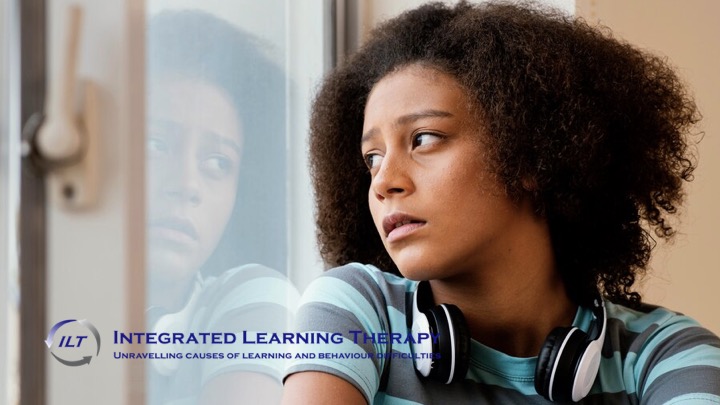
Has your 4-year-old been labelled as ADHD?

Has your 4-year-old been labelled as ADHD?


It’s not uncommon that quite a few very young boys are described as ‘ADHD’ or hyperactive.  They are regarded as being overly ‘busy’, mainly by their preschool teachers.  Are we forgetting that most young children are highly active, energetic and generally spend much time ‘on the move’?   While it is important that true attentional problems are recognised early on so that children can receive the correct help, it can be tricky to identify these correctly.  My long years of experience have shown that highly active young boys generally settle down as they grow, perform well at school and fail to develop any attention or other learning related problems.

So why are teachers sometimes labelling youngsters incorrectly?  Perhaps we need to consider how they come to this decision and consider what other aspects may be contributing to the children’s inattentive behaviours.

A child who fails to concentrate in one situation is in danger of being seen as a child who can’t concentrate in any situation. If a child doesn’t sit still he is in danger of being called hyperactive. His parents might be panicked into believing hyperactivity and poor concentration are permanent conditions which will need specialist treatment, including medication.

Highly mobile youngsters may show a disinclination to sit down and engage in table tasks.  Their preference will be for outdoor play, usually very physical.  Or others may seem to dislike concentrating on teaching materials, rejecting colouring-in, crafts, puzzles and so on.  They prefer any number of other games or activities that are enjoyed at home.    Boys in particular need to be physically engaged and take much longer to adapt to more sedentary tasks.  They may not want to concentrate on the teaching events, listen to stories sitting quietly in a circle, or follow the teacher’s instructions.

Check his concentration

You can check whether your child can concentrate by giving him something to do which he enjoys doing, and which takes concentration.  If your child can pay attention to the activity for at least five minutes you will know he can concentrate (and sit still).  It’s important to emphasise that if someone can concentrate in one situation, then the problem is not an inability to concentrate.  If your child’s attention wanders before the five minutes have passed, maybe he does need your help.  The nature of the help will depend on your assessment of the situation so let’s consider some relevant points.

  1. Have realistic expectations.  Some children seem to be able to concentrate better than others.  If you compare one child to others, you may be unrealistic in terms of what he can and can’t do.  Instead, compare what your child is doing this week with what he was doing last week; how he behaved when he went to bed last night; how he played with other children at school compared with how he plays with them at home. When you focus on your individual child and notice changes in his behaviour, it helps avoid becoming trapped into thinking that your child has a problem simply because he’s different from others. 
  1. Avoid using checklists.  Checklists can convince you that your child has a serious problem because they can be so all inclusive that parents or teachers will find something on the list that applies to that child.  They make you feel they are describing unusual behavior but often they are only describing things that every child will do sometimes.  Checklists for ADHD can include the following questions: 
  • Does your child forget instructions?
  • Does your child have a short temper?
  • Does your child fidget?
  • Does your child constantly ask questions?
  • Does your child leave his bedroom untidy?
  • Does your child produce messy work?
  •  

Doesn’t this look like a list of the stages that all children go through and outgrow? 

  1. Does your child know how to pay attention?  Some children will seem to pay attention automatically.  However, every child learns differently and for some, the ability to attend doesn’t come naturally. They need help in learning to concentrate and the good news is that concentration can be taught. For children to learn concentration, they must be given responsibility, must feel that their contribution to family life matters and must have the chance gradually to develop the skills everyone needs in order to be able to function successfully.
  1. Does your child only pay attention when it suits him?  The reason for this may be because what he should be doing is: too difficult, too boring, too tedious or not clearly understood.  The child will simply try to get out of something he doesn’t want to do or feels incapable of doing.  This avoidance behavior needs investigating and a good place to start is to find out whether or not he understands how to learn or how to approach the task given.  If children are not expected to learn to do things at home, they may struggle to learn at school.  Setting the dining table is a good example of an age-appropriate task that can be used to teach a young child to learn.  It’s a simple everyday activity but it needs a system.  While busy, your child will have to keep thinking until the job is done.   Having chores to do at home are good learning opportunities that have unexpected spin-offs! 

What to do?

If reports from school concern you, don’t ignore them but don’t overreact either.  First do your own assessment of the situation and then, if need be, find a helping professional that will look holistically at the situation.   While most of the younger boys suspected of having ‘ADHD’ will not need intervention, some might well benefit from help.  Unusual behaviours can have many different causes – which is why ILT practitioners are taught to consider all possibilities. 

Image supplied by Freepik.


Secure attachment: How important is this for your child?

Secure attachment: How important is this for your child?

Most of us are aware that children and parents or caregivers typically form a strong emotional bond.  If the relationship is positive, this is called a ‘secure attachment’.

Writing for ‘The Conversation’, Deneault and Madigan explain that Secure attachment acts like a superpower for children.  A strong, positive bond lays the foundation for healthy achievement in children, such as succeeding at academics, good social development, being able to regulate their emotions and general well-being.

The importance of secure attachment has led to studies to clarify how parents can help develop this.  A recent study by Deneault and Madigan shows that when parents’ behaviour shows more sensitivity to children’s needs, the child is far more likely to develop secure attachment.

Here are some of their findings:

Being present and attentive

A sensitive parent notices when a child needs attention and quickly provides comfort and reassurance.  Infants may cry when they are hungry or scared; older children may have a mishap and hurt themselves.  Sensitivity means that parents responds promptly, without being distracted or preoccupied with their own concerns.  They recognise and the child’s cues and act effectively.

Being sensitive fosters trust and security

The research, published in Psychological Bulletin, highlights how sensitive and responsive parenting behaviours are key ingredients to achieving secure attachment.

Importantly, this link was present for children of all ages, as well as for girls and boys.

This study shows that sensitive behaviours tell children that they can rely on their parent in moments of need and trust them to help, which fosters secure attachment.

A sense of secure attachment with their parents or first caregivers is also the foundation for relationships with many other caregivers as children grow up, such as grandparents and educators. By having a caregiver who responds to their needs, children learn that when things get hard, they can rely on others for support and comfort.

Many people may primarily think of mothers when it comes to comforting a distressed child. However, this study reiterates that sensitive parenting matters for both parents and can, in fact, be achieved by any caregiver. alike.  Being able to recognize and respond to a child’s needs is about being attentive and caring for the child, and this can be achieved by any caregiver.

Strategies to be more sensitive

Here are some strategies to help parents and educators.

  1. Recognize children’s signals. Children signal their needs differently based on their age. For example, babies cry, whimper or grimace to signal their needs. Babies also babble to show their interest in making sounds and to have those sounds be repeated back to them. Older children may cry, openly state their needs or refer to physical symptoms that may signal needs. Teens may withdraw. It’s important to remember that all kids are different, and it may take some time and patience to recognize each child’s specific signals.
  1. Respect children’s pace. It’s important to let the child take the lead. Allow the child set the pace and direction when you interact with them. For example, a small child might want to stop and inspect every rock or flower on a short walk, which might seem slow or dull to a parent, but is a fascinating adventure to a small child whose brain is rapidly developing. By letting children take the lead during play, encouraging their exploration and commenting on what they are interested in, you are helping them understand their world better.
  2. Be kind to yourself. Caregivers can sometimes experience pressure to be the “perfect parent.” However, it can sometimes be difficult to respond sensitively when we are feeling stressed or pulled in all directions. So, while we aim for consistency in our caregiving responses, it’s also important to be kind to ourselves and understand that we are human too.


Journal information: Psychological Bulletin 

Provided by The Conversation 


Image supplied by Freepik.


Emotional problems in children with ADHD symptoms

Emotional problems in children with ADHD symptoms

The symptoms typically associated with ADHD include difficulty focusing, completing tasks, acting impulsively and high levels of activity.  In addition, many show problems regulating emotions. These show up as depression, anxiety and anger outbursts. 

In a recent research publication in Nature Mental Health Cambridge scientists describe how they found that as many as one in two children diagnosed with ADHD show signs of emotional dysregulation and believe that emotional problems may be a core symptom of ADHD.  In addition, they found that Ritalin – the most commonly prescribed medication to control the condition – does not seem to be effective at treating this.

The number of children presenting with the symptoms of ADHD seems to be increasing and these days, more adults are being recognised as having the type of problems associated with the disorder.  Including these are self-control problems, which affect their ability to regulate emotions.  The study mentions that one is 50 children diagnosed with ADHD also experience mood disorders, such as depression, while more than one in four experience anxiety.  Verbal or physical outbursts are common, due to their inability to control and regulate emotions.

These problems were thought to be a result of other symptoms associated with ADHD, such as problems with cognition and motivation. But this latest study shows that emotional dysregulation occurs independently of these.

Professor Sahakian, a lead researcher wrote that “Parents and teachers often say they have problems controlling children with ADHD, and it could be that when the children can’t express themselves well—when they hit emotional difficulties—they may not be able to control their emotions and have an outburst rather than communicating with the parent, teacher or the other child.”

Professor Sahakian hopes that acknowledging emotion dysregulation as a key part of ADHD will help people better understand the problems the child is experiencing. This could lead to using effective treatments for regulation of emotion, such as cognitive behavioral therapy.

The findings may also point to potential ways to help the child manage their emotions, for example by using cognitive behavioral techniques to learn to stop and think before they react and to express their feelings verbally, or use techniques such as exercise or relaxation to calm themselves or alleviate symptoms of depression and anxiety.

Identifying the problem earlier would allow for alternative, more effective interventions to help the child better manage their emotions, potentially helping the individual in adulthood.

While it is not clear exactly what causes these problems in the first place, the researchers found signs of a link to possible dysfunction of the immune system, with individuals who exhibited signs of emotion dysregulation showing higher percentages of certain types of immune cell.

Professor Sahakian added, “We already know that problems with the immune system can be linked to depression, and we’ve seen similar patterns in individuals with ADHD who experience emotion dysregulation.”


More information: Wenjie Hou et al, Emotion dysregulation and right pars orbitalis constitute a neuropsychological pathway to attention deficit hyperactivity disorder, Nature Mental Health (2024). DOI: 10.1038/s44220-024-00251-z

Journal information: Nature Mental Health 

Provided by University of Cambridge 


Image supplied by Freepik

Is your child a perfectionist? How to help.

Is your child a perfectionist? How to help.


The world needs perfectionists.  We appreciate this trait in our brain surgeon, the person responsible for building our home, the person working on the assembly line of our next car. Yet extreme perfectionism brings its own challenges to individuals. We see the signs of developing perfectionism in some young children: those who refuse to colour in because they can’t keep between the lines, or those who try to avoid a school task because it seems too daunting to complete to their exceptionally high standards.

The more extreme forms of perfectionism can be exhausting and unhealthy for some children.  If they can’t cope with a flawless performance, they become extremely self-critical, which prevents them from actually accomplishing what they would otherwise like to do.

Perfectionism has been divided into two forms (Westrupp, King and Sheen, writing for The Conversation):

  1. Perfectionistic strivings, characterised by a determination to meet goals and achieve highly
  2. Perfectionistic concerns, shown when a child frets about being able to meet high standards, and self-criticism about performance.

While perfectionistic strivings can be positive and lead to high achievement, perfectionistic concerns can lead to a higher chance of children developing eating disorders or anxiety and depression, and having lower academic achievement.

You can help by trying to develop a growth mindset rather than a fixed mindset in your children (Ginsburg, American Academy of Pediatrics).  He writes that praise and criticism can lead to a “fixed mindset,” rather than a healthier “growth mindset.” For example, when children are constantly praised for being ‘smart’ or ‘clever’ they are more likely to grow to fear being seen as anything else, while those who receive approval for the effort they put into their tasks develop a passion for growth.

Young people with a growth mindset believe their intelligence can be developed with effort. When they don’t do something as well as they hoped, they don’t see themselves as failures, but as learners. In contrast, people with a fixed mindset (including perfectionists) may believe people are either smart or not, and that failure proves you’re not. They may even believe that having to work hard at something suggests a lack of natural intelligence.

People with a growth mindset feel successful when they can do something they couldn’t do before, whereas those with fixed mindsets feel successful when they avoid errors or task that seem too challenging.

To help your child build a growth mindset, praise the effort, rather than the product.  Do be mindful of the amount of time the child needs to put effort into a task.  Time and energy spent on a project may deprive them on needed sleep, exercise, play or social time.  They need to learn how to balance the demands of their daily lives otherwise they could feel overwhelmed and find it difficult to focus on any one activity.

Ginsburg suggests that the best antidote to an unhealthy sense of perfectionism is unconditional acceptance.  The most essential ingredient in raising resilient children is the connections you create when you love or accept your children unconditionally and hold them to high but reasonable expectations.  School results or performance should not be the focus of your expectations but rather effort, integrity, generosity, empathy and other attributes valued by our societies.


Image supplied by Freepix.

Good news for bilingual families

Good news for bilingual families


In South Africa, many families are bilingual with some children even learning more than two languages at an early age.  There has been uncertainty as to the effect of being bilingual on language development, with some advocating for the use of a single language in the home during early years of development.

More recently, however, there has been a shift in this thinking.  A study, headed by Athanasia Papastergiou, Lecturer in the Linguistics department of Bangor University, published in the journal Behavior Research Methods, reports on an innovative way of examining thinking skills in school-aged Greek-English bilingual children in the UK.  The bottom line is that they found superior thinking skills in those who spoke two languages.

“It is very exciting to develop this new approach to the study of bilingual children. I hope that these positive results will help to allay any possible fears about bringing up children bilingually and highlight the benefits of doing so.”

The benefits of learning two languages

The findings show that learning two languages can have benefits for children’s development.  For example, they asked children to remember and repeat as many numbers as they could, to ignore irrelevant information, and to shift quickly between different tasks. Bilingual children were better overall than monolingual children.

The team will now expand its research to other languages.

Image supplied by Freepik

More information: Athanasia Papastergiou et al, The executive function of bilingual and monolingual children: A technical efficiency approach, Behavior Research Methods (2021). DOI: 10.3758/s13428-021-01658-7


Do you label you child?

Do you label you child?

There is a widespread tendency to use words to label children.  How often haven’t you referred to a child as ‘clever’, ‘naughty’, ‘lazy’, etc.  We might think that we are helping them recognise their attributes or deficits but in fact, we could be holding them back.

Monteserrat Gutiérrez and Paula Carvacho writing for The Conversation, say that there is a delicate balance between encouraging and uplifting a child and damaging their self-esteem.  We need to be so careful of how our words affect the children who hear them.

Labelling

The term labelling generally refers to how we classify or describe the identity of people who deviate from what is considered normal or appropriate.  Whether positive or negative, a label implicitly judges how far a person strays from the expectations of a society.

How does labelling impact on development?

We generally consider labels to fall into one of two categories: positive or negative. Negative labels obviously can influence a child’s perception of themselves.  If a child is constantly told that they are ‘stupid’, ‘slow’, ‘useless’ and so on, they will come to believe that these are permanent traits.  It will be very difficult to change their self-beliefs at a later stage. 

Over time, their self-beliefs can affect their behaviour and personality, ultimately leading to a negative self-esteem and feelings of inferiority.

On the other hand, positive labels can be just as bad.  Calling a child ‘clever’ means that we emphasise their achievements and connect their intrinsic worth with their performance.  This may mean that a drop in performance might lead them to believe that they have dropped in their value as a person.

In this light, it might be a mistake to believe that constant praise in terms of positive labelling will give children a boost of self-esteem.  A child used to thinking they get good marks at school because they are clever, for example, may end up with a fear of failure, and be more prone to frustration and overexerting themselves.

How then do we convey the message that something has been done well, or that we think an action or behaviour is commendable? The key lies in linking labels to the process rather than the outcome, especially in academic settings. We can, for example, show our pleasure or admiration with the degree of involvement or effort that a child invested in a task, rather than the mark achieved.

Labels may define what we become

Labels have the power to define what an individual will become. They directly impact our beliefs about our abilities, meaning an individual, once labelled, will expect the same outcome from themselves in similar situations.  For example, a child who grows up to hear that they are ‘hopeless at maths’ will be reluctant to tackle figure-based tasks even as an adult.  In this way, labels become self-fulfilling prophecies.

The Pygmalion effect

In psychology, the Pygmalion effect refers to the potential influence that one individual’s belief—often a teacher, parent or leader—can have on another’s performance. This phenomenon can be observed when repeated labels are internalized by an individual, becoming part of their reality that is then taken for granted.

There seems to be a link between labelling a child and this effect.  If a child’s behaviour or beliefs are based on external judgements of who they are, they will end up confirming and reinforcing them through their behaviour and expectations of themselves.

Keep in mind the power of words

We need to resist describing and categorising children by their abilities or personal traits. Instead, we can address children’s issues in a way more supportive of their healthy development. 

For example, a child may struggle to keep their room tidy. Instead of saying “you’re so untidy,” we can offer to help them organise or tidy up, or say something along the lines of “try and tidy your room, I’m sure you can handle it but let me know if you need a hand.”

We can also highlight a person’s unique worth by statements such as “you are special to me”. If we want to tell a child they are good at a particular task without rewarding mere obedience we can say something like “I love how much effort you put into doing that” or “I saw you sharing toys with your friend, that was nice of you.” Instead of saying “you’re talented” we can say “I can tell you like drawing. Would you like to try out some new techniques or colours?”

Importantly, praise and positive reinforcement should come at the same time that the action happens: by giving immediate recognition we reinforce the connection between a behaviour and its positive response. In this way, praise or rewards are linked to the action itself, and not to the child’s identity, personality or intrinsic worth.


Provided by The Conversation 

Image supplied by Freepik